
Asia Pacific Smoothies Market
The Asia Pacific smoothies’ market is expected to grow from approximately USD 4.5 billion in 2025 to around USD 8.5 billion in 2030, at a compound annual growth rate of around 12.8% during 2025-2030.
Explore reportThe North America Edible Mushroom Market was valued at USD 13.13 billion in 2023 and is projected to reach a market size of USD 20.65 billion by 2030. Over the forecast period of 2024-2030, the market is projected to grow at a CAGR of 6.7%.
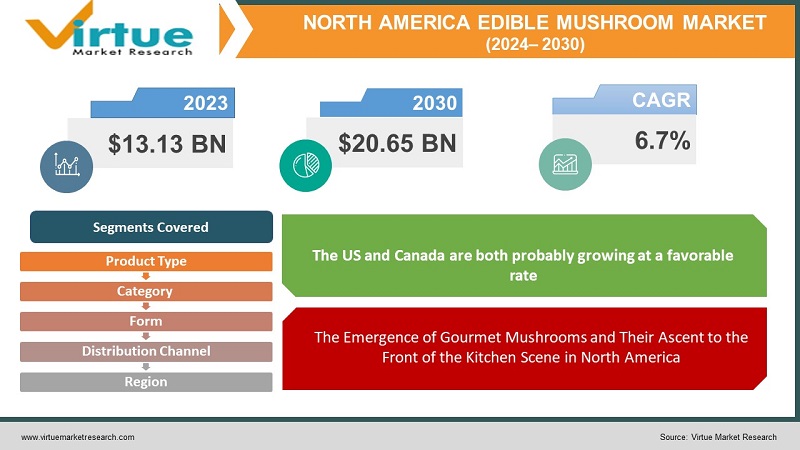
There are many delicious edible mushrooms in North America. Morels, with their rich flavor and spongey cap, chanterelles, with their trumpet-shaped caps and fruity aroma, oyster mushrooms, with their fan-shaped caps and gills, chicken of the woods, with its meaty texture, and hedgehog mushrooms, with their spines on the underside, are some options that are good for beginners.
Key Market Insights:
The market for edible mushrooms in North America is expanding rapidly. The market is projected to grow from its 2020 valuation of USD 8.3 billion to USD 14.7 billion by 2027 at a compound annual growth rate of 8.2%. Rising disposable incomes, a growing interest in gourmet and exotic mushrooms, and greater health consciousness are the main drivers of this rise.
Specialty, locally grown, and organic mushrooms are becoming more and more popular among consumers. 82% of buyers would want to purchase locally sourced mushrooms. This pattern suggests that there may be a market niche for regional small-scale mushroom growers.
The trend of food shopping online is growing in popularity, and the mushroom industry is no exception. In 2022, fresh produce accounted for a sizable portion of the US's $100 billion online grocery sales boom.
The effects of consumer food choices on the environment are worrying consumers more and more. As a result, there is an increasing market for mushrooms that are grown responsibly. The market for specialty mushrooms is predicted to benefit from rising demand for environmentally friendly packaging. This implies that manufacturers will have a competitive advantage if they can demonstrate sustainable methods.

North America Edible Mushroom Market Drivers:
North American Health-Mushroom Mania with fungus among us, conscientious consumers are driving the market.
In North America, the trend towards more health-conscious eating is growing, and mushrooms are riding this wave. These adaptable fungi are a dieter's dream since they are naturally low in fat and cholesterol. But there's more to their appeal than merely tracking calories. Mushrooms are a great source of vitamins, minerals, and antioxidants that are necessary for good general health. Interestingly, research indicates that they may provide more than just essential nourishment. For instance, research from the National Cancer Institute suggests that there may be advantages for the immune system and possibly cancer prevention. Given this combination of beneficial qualities and intriguing opportunities, it makes sense that people in North America are turning more and more to mushrooms to improve their diets.
The Emergence of Gourmet Mushrooms and Their Ascent to the Front of the Kitchen Scene in North America
A mushroom revolution is happening in the world of cooking! The days of using simple white button mushrooms only as a garnish are long gone. A growing variety of these intriguing fungi is being embraced by chefs due to changing tastes and curiosity. These days, a wide variety of mushrooms are included on restaurant menus, often as main ingredients in gourmet dishes. The options are boundless, from meaty maitake to earthy porcini adorning delicate risottos or vegan stir-fries. This is more than simply a fine-dining phenomenon in the culinary world. The simplicity of adding mushrooms to regular meals and the availability of creative recipes are inspiring home chefs to catch on as well. Mushrooms are becoming a staple in everything from pasta sauces to pizzas due to their adaptability and depth of flavor, which turns weekday dinners into thrilling culinary excursions.
North America Edible Mushroom Market Restraints and Challenges:
The edible mushroom business in North America is not without its challenges. The product's inherent nature is a significant obstacle. Mushrooms have an incredibly limited shelf life and are sensitive and highly perishable. This results in transportation and storage logistical doomsdays, raising expenses and perhaps resulting in large waste. Mother Nature also contributes, since seasonal variations in humidity and temperature influence output. This may generate supply chain disruptions and vexing annual pricing swings. Moreover, it's possible that some North American customers are still in the white button mushroom rut and aren't aware of the fascinating world of specialty types. This incomplete understanding may impede wider acceptance and keep daring palates from seeing the full potential of these adaptable mushrooms.
North America Edible Mushroom Market Opportunities:
The mushroom industry in North America is suitable for the development of both fungi and promising prospects. The field of functional and medicinal mushrooms is one promising direction. Reishi, chaga, and lion's mane are gaining popularity among consumers due to their potential health advantages, which go beyond basic nourishment and include immune system support and adaptogenic qualities. Producers have a fantastic potential to grow and promote these wellness-focused cultivars because of this trend. Convenience is something that consumers want, and the mushroom business is paying attention. To satisfy this need, choices that are pre-washed, sliced, and ready to eat are proliferating. Busy home cooks are also drawn to new and inventive forms such as mushroom jerky or recipe packages that highlight this versatile fungus. Another factor influencing the future of mushrooms in North America is technology. Innovations in indoor and vertical farming provide answers to conventional production problems. These regulated settings can improve growth conditions, which might result in year-round production as well as increased yields and better quality. The other major development is the growth of e-commerce platforms. By creating direct-to-consumer channels or subscription services, producers may take advantage of this. For those looking for convenience and variety, picture having a box full of fresh, exotic mushrooms or pre-made recipe kits sent right to your home.
NORTH AMERICA EDIBLE MUSHROOM MARKET REPORT COVERAGE:
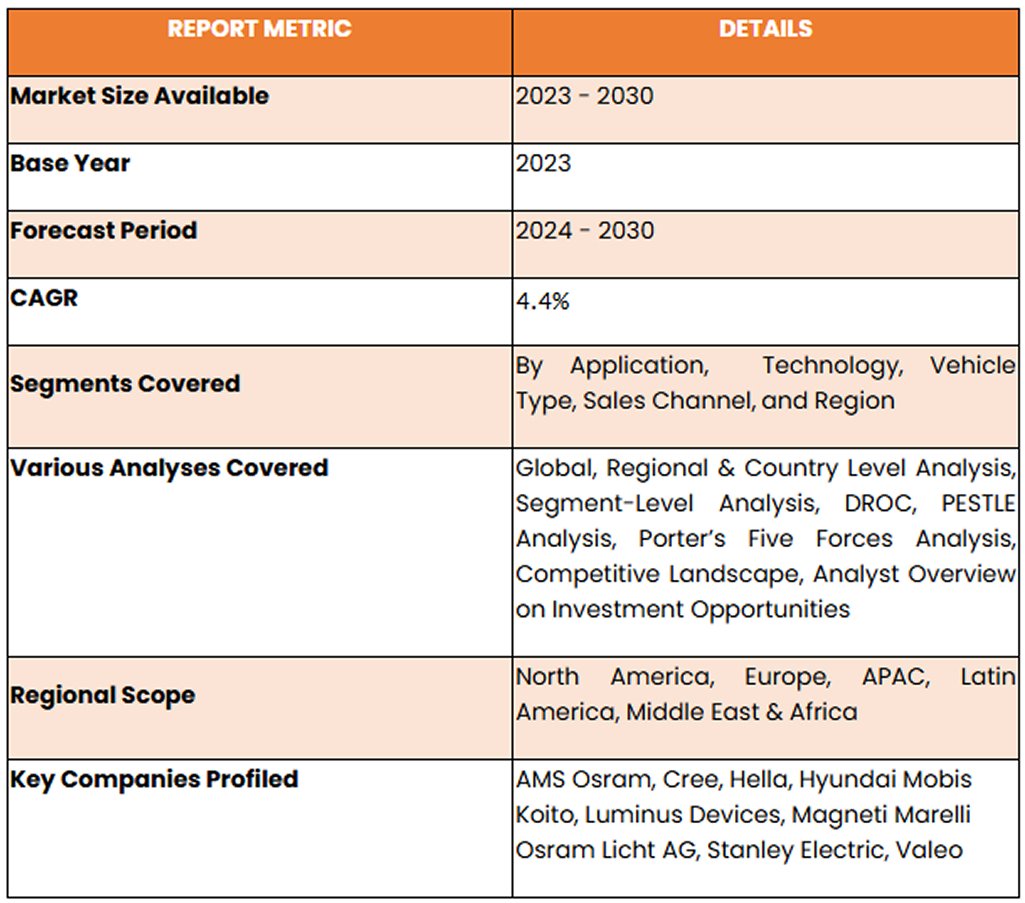
|
REPORT METRIC |
DETAILS |
|
Market Size Available |
2023 - 2030 |
|
Base Year |
2023 |
|
Forecast Period |
2024 - 2030 |
|
CAGR |
6.7% |
|
Segments Covered |
By Product Type, category, form, Distribution Channel and Region |
|
Various Analyses Covered |
Regional & Country Level Analysis, Segment-Level Analysis, DROC, PESTLE Analysis, Porter’s Five Forces Analysis, Competitive Landscape, Analyst Overview on Investment Opportunities |
|
Regional Scope |
North America, USA, CANAD, MEXICO |
|
Key Companies Profiled |
Monterey Mushrooms, Inc., Giorgio Fresh Co., Phillips Mushroom Farms, Highline Mushrooms, South Mill Champs, To-Jo Mushrooms, Inc., Greenyard Group, Costa Group, Hokto Kinoko Company, FreshCap Mushrooms |
North America Edible Mushroom Market Segmentation:
Button mushrooms continue to be the most widely available and affordable kind in the North American market, but things are getting funky in the future. Functional/Medicinal Mushrooms are the fastest-growing category, taking advantage of consumer interest in wellness and health. These super fungi, which are valued for their possible adaptogenic qualities and immune system support, include chaga, reishi, and lion's mane.
In North America, fresh mushrooms are still the best because of their superior flavor and nutritional value, but processed mushrooms are the fastest-growing market segment. They provide pre-washed, sliced, and ready-to-eat options for busy consumers, and they also offer exciting new formats like mushroom jerky that satisfy our fast-paced lifestyles without compromising the deliciousness of mushrooms.
Although supermarkets and other physical retailers continue to dominate the mushroom distribution industry in North America, a digital threat is posing a threat to their dominance. The channel with the quickest rate of growth is non-store-based retail, which includes direct-to-consumer services and online grocery shopping. This trend offers a potentially greater range and satisfies our demand for online convenience especially for those who are looking for exotic mushrooms.
The current market leader in North America is ordinary mushrooms because of their accessibility and affordability. However, the organic market is expanding at the quickest rate due to customers' concerns about their health. The growing interest in both environmental sustainability and personal health is reflected in this trend, which opens new opportunities for organic mushroom growers to build a devoted consumer base.

Because of its sizable population, well-established infrastructure, and commitment to a healthy diet, the US leads the North American mushroom industry. Canada is not far behind, with consistent expansion driven by comparable health-conscious tendencies. Mexico has a small amount of market share, with some domestic manufacturing and possible imports from the US to meet demand from consumers. The US and Canada are both probably growing at a favorable rate, which makes the whole North American market a blossoming bed of opportunity for the future of fungus, even though it's difficult to determine which country is growing the quickest.
Not all negative news for North American mushrooms came from COVID-19. The epidemic brought unexpected possibilities along with some headaches. Travel bans and lockdowns complicated the supply chain, causing short-term shortages and fluctuations in prices. Closing restaurants, which are big users of mushrooms, also meant a decline in demand from the food service sector. Production facilities had a labour scarcity because of limitations and safety concerns, which influenced output. There were some unanticipated advantages to these difficulties. Home cooking took off as more people stayed at home and eateries closed. Retail mushroom demand increased because of this growth in home cooks. The epidemic also increased attention on immunity and health, which may have increased interest in therapeutic and functional mushrooms. As people looked for easy and safe methods to purchase products, particularly fresh produce like mushrooms, e-commerce flourished. Overall, the mushroom market in North America had a brief setback due to the first shock of COVID-19. However, business has shown to be flexible. The rise in e-commerce, home cooking, and the possible long-term trend toward health-promoting mushrooms are all indications of a bright future. In order to maintain the growth of this fascinating industry, manufacturers and merchants will need to adjust their strategies and take advantage of these trends as we move forward by comprehending the potential and difficulties brought about by the epidemic.
Recent Trends and Developments in the North America Edible Mushroom Market:
The market for edible mushrooms in North America is booming like a healthy bed of fungus. These adaptable powerhouses are seeing a boom in demand from health-conscious customers looking for nutrient-dense choices. Because of their high vitamin and antioxidant content, low fat and cholesterol-free composition, and exquisite taste, mushrooms are a great way to improve your diet. Further piquing consumer interest is intriguing studies pointing to possible health advantages including immune system support and possibly cancer prevention.
The food industry is joining in on the fun as well. The days of simply thinking of simple white mushrooms are long gone. Chefs are putting them front and center with a wave of culinary creativity that incorporates intriguing variety into gourmet masterpieces. Inspired by these new culinary explorations and the innate adaptability of mushrooms, home cooks are starting to follow suit. On the manufacturing side, innovation is also arising. Improvements are resulting in increased yields, better quality, and even answers to problems like short shelf lives. Another significant concept gaining traction is sustainability. In addition to reducing their environmental impact, producers who use eco-friendly techniques like composting or recycled packaging also appeal to a rising segment of environmentally concerned consumers. The mushroom market in North America appears to have a fungus-filled future. This dynamic industry is well-positioned for sustained growth and success because of its emphasis on convenience, health, and ongoing innovation.
Key Players:

Global automotive lighting refers to all vehicle lighting systems, from headlamps that illuminate the road to taillights that communicate movements. They guarantee motorists and other road users alike safety, visibility, and style. While taillights frequently use LEDs for improved visibility, headlights are available in a variety of technologies, including LED and laser. Interior illumination, DRLs, and signal lights all have a role to play. This market, which was estimated to be worth $33.64 billion in 2022, is anticipated to rise to $67.39 billion by 2030 because of laws, luxury tastes, safety concerns, and technological developments like OLED taillights and adaptive headlights. Anticipate a future dominated by intelligent, connected, personalized, and sustainable lighting systems that enhance the safety, efficiency, and aesthetic appeal of automobiles.
Car lighting works its magic to provide safety, visibility, and style. Headlights cut through the night, taillights express intent, and interiors shine with comfort. The billion-dollar global business is expected to rise due to consumer demand for high-end experiences, safer roads, and cutting-edge technology. Imagine dynamic messages being painted by taillights, headlights that adjust to the road, and interiors that customize their atmosphere. Driven by technological advancements like linked systems and laser beams, this future is calling. Anticipate even more visually attractive, environmentally friendly, and intelligent lighting to illuminate the way ahead, making cars safer, more efficient, and unquestionably cooler.
In the market for automobile lighting, safety is the driving force behind demand from the public and laws. While automated high beams smoothly react to traffic, adaptive headlights modify their beams so as not to blind other people. With visually striking displays, dynamic taillights convey intentions for braking and turning. Beyond these developments, integrated pedestrian identification and lane departure alerts will soon make roads safer and brighter for everyone.
Luxurious automobile lighting creates a distinct visual identity that goes beyond simple illumination. Personalized interior lighting customizes the driving experience by setting the mood with a range of colours and intensities, while intricate designs and distinctive DRLs modify exteriors. As you approach your automobile at night, welcoming lights lead the way, resulting in an interior that is perfectly lit. Not only is this symphony of light aesthetically pleasing, but it also stands as a tribute to luxury. Upcoming developments like gesture-controlled lighting and holographic displays promise to further enhance the experience.
The worldwide automotive lighting market is undergoing a significant transition towards energy-efficient solutions, as environmental concerns gain prominence. LED technology is leading the way, providing a ray of hope for the environment and drivers alike. LED lights beam brighter and use a lot less energy than conventional halogen lamps. There are some tangible advantages to this. For drivers, this translates to increased fuel economy, which lowers petrol prices and lessens reliance on fossil fuels. Greater air quality and a reduction in the transport sector's contribution to climate change are the results of reduced overall emissions.

Although the global automotive lighting business is booming, there are still unknowns. Difficulties impede growth even as innovation propels it with eye catching features like laser beams and adaptable headlights. These technologies are luxury items due to their high cost and difficult integration, which puts producers' abilities to the test. The worldwide patchwork created by unclear legislation limits the potential of innovation. Durability issues persist, particularly when complex systems are subjected to challenging conditions. Ultimately, a lot of drivers still don't fully understand how these improvements can help them. Together, we can overcome these obstacles. The keys to reducing costs are improved production, more seamless integration, and unified regulations. Their full potential can be realized by educating customers about the safety, efficiency, and aesthetic value of these lighting wonders. By working together, we can pave the way for an even brighter and safer future for vehicle lighting.
It is made possible by advanced LED technology, which gives drivers the ability to customize their illumination for the highest level of comfort and flair. Consumers that care about the environment want greener products, and vehicle lighting complies. While solar- and self-powered lighting technologies offer a future powered by clean energy, energy-efficient LEDs lower pollution. The advent of connected lighting systems heralds a new age. Envision automobiles interacting with infrastructure and one another to minimize accidents and enhance traffic efficiency. Integrated headlights with pedestrian recognition provide unmatched safety, while dramatic taillights with eye-catching displays alert onlookers to your intentions. The possibilities are endless in the future. Gesture-controlled interior illumination, holographic displays projected onto the road, and even light fixtures with self-healing capabilities.
Due to laws requiring safety features like headlights, taillights, and brake lights, exterior lighting presently holds the most market share in the vehicle lighting industry. The dominance of this market is partly attributed to advancements in safety-focused technologies such as adaptive headlights and daytime running lights. The market value of external lighting is increased by the quick adoption of technology like LED bulbs and laser lights, which improve performance and aesthetics. Conversely, the interior lighting market is expected to increase at the fastest rate in the upcoming years. Innovations like ambient lighting and technology breakthroughs like LED and OLED displays, driven by consumer demand for comfort and personalisation, open new possibilities. The spread of sophisticated interior lighting systems is further driven by the growing emphasis on safety and the expansion of the luxury car market.
The worldwide vehicle lighting market is currently dominated by halogen because of its more affordable price, advanced technology, and useful illumination. With its dependable supply chain and affordable option for manufacturers and cost-conscious customers, halogen holds the biggest market share. The fastest-growing market right now is LEDs, which are predicted to shortly overtake halogen. The rapid expansion of LEDs is driven by their higher efficiency, longer lifespan, flexibility in design, and technological breakthroughs including enhanced brightness. Because LEDs use less energy and produce fewer emissions and better fuel economy, they are becoming more and more popular in the changing automotive lighting market.
Passenger automobiles rule the worldwide automotive lighting market. The sheer number of passenger cars produced which surpasses that of business vehicles and fuels the need for lighting systems is the primary cause of this popularity. The growing demand for personal automobiles in developing nations is a result of rising disposable income, which in turn drives the rise of the passenger car market. The importance that consumers place on safety and aesthetics elements helps to drive market expansion. But in the upcoming years, the market for electric and hybrid cars is expected to develop at the quickest rate. The exponential rise of the worldwide electric car market, which is still expanding and shows no signs of slowing down, is what is driving this surge. Specialised lighting solutions are required since electric and hybrid vehicles have different lighting requirements because of their specific functionality and design aesthetics.
Most lighting systems sold nowadays are sold by OEMs (Original Equipment Manufacturers), primarily because manufacturers pre-install lighting systems in new cars. But in the next years, the aftermarket is expected to develop at the quickest rate. This spike in demand for replacement parts, especially lighting systems, can be linked to several variables, one of them being the average age of cars. The industry is expanding because of consumers' growing desire to personalise their cars with aftermarket lighting upgrades such LED upgrades and decorative lighting. The availability and affordability of technologies like adaptive headlights and laser lights in the aftermarket, together with other advancements in lighting technology, are driving demand even more. Moreover, the growing market for electric cars (EVs).
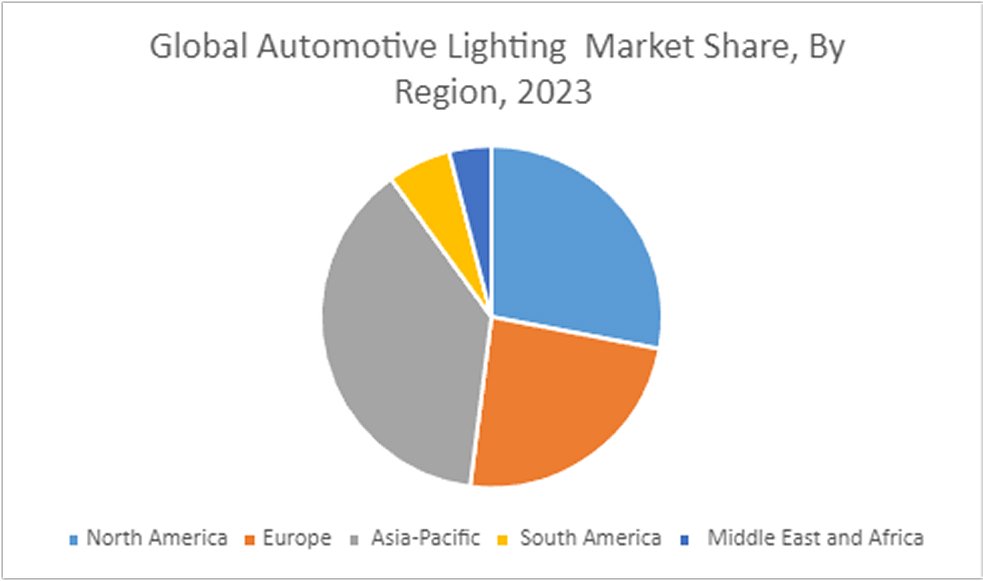
Throughout the forecast period, Asia Pacific is anticipated to be the automotive lighting market with the highest profitability. Over the past few years, Asia Pacific countries like China and India have seen notable increases in automotive manufacturing and sales, primarily in the medium-to premium luxury car segment. Asia Pacific is predicted to see an increase in the manufacturing of passenger cars, with India experiencing the strongest growth rate. Depending on the state of the national economy, the area offers a suitable selection of both high-end and cheap cars. For instance, there is a substantial demand for halogen, Xenon/HID, and LED since China and India produce more economy and mid-range automobiles. On the other hand, luxury car adoption rates are greater in South Korea and Japan, where LED lighting is the norm.
A brief shadow was thrown by COVID-19 over the worldwide automotive lighting market. Production was stopped by lockdowns and supply chain disruptions, while luxury lighting upgrades were shelved by consumers on a tight budget. Resources became scarce, and R&D stagnated. Still, the market is recovering thanks to resurgent demand and rearranged priorities. While energy-efficient LEDs are being pushed towards adoption by sustainability, safety concerns are driving interest in features like pedestrian detection and adaptive headlights. The digital push of the epidemic creates opportunities for intelligent, networked lighting systems that may interact with infrastructure and other cars. Ultimately, the industry is positioned to shine brighter, focused on safety, sustainability, and a connected future, even though the pandemic dimmed its brilliance.
A development collaboration between OSRAM Continental and REHAU aims to incorporate lighting into external components, providing automobile manufacturers with innovative lighting options that improve functionality and design flexibility. For rear combination lamps, Hella unveiled a revolutionary lighting innovation called Hella FlatLight technology. A Memorandum of Understanding (MoU) was signed by Samvardhana Motherson Automotive Systems Group BV (SMRPBV), a division of Motherson Group, and Marelli Automotive Lighting to investigate a technology collaboration focused on intelligently lighted external body components. Valeo debuted their revolutionary 360° lighting system at the Shanghai Auto Show. This technology surrounds the car with a band of light, projecting instantaneous, clear signs that other drivers can see from a distance. Pedestrians, cyclists, and scooter riders are especially susceptible to these signals
The North America Edible Mushroom Market size is valued at USD 13.13 billion in 2023.
The worldwide North America Edible Mushroom Market growth is estimated to be 6.7% from 2024 to 2030.
North America Edible Mushroom Market segmentation covered in the report is By Product Type (Button Mushrooms, Specialty Mushrooms, Functional/Medicinal Mushrooms)
By Form (Fresh Mushrooms, Dried Mushrooms, Processed Mushrooms); By Distribution Channel (Store-Based Retail, Non-Store Retail, Specialty Stores); By Category (Organic Mushrooms, Conventional Mushrooms), and by region.
There are no indications that the mushroom market in North America will slow down. As people look for mushrooms with health-promoting properties, functional and medicinal mushrooms like reishi and lion's mane should become more and more popular. Also, convenience will be crucial, with pre-washed and ready-to-eat choices growing in popularity. Lastly, improvements in indoor growing and vertical farming may result in year-round production and increased accessibility to these delectable mushrooms.
The edible mushroom industry in North America was affected by the COVID-19 epidemic in a variety of ways. In addition to the initial difficulties, it brought about, such as restaurant closures and interruptions in the supply chain, it also resulted in a rise in home cooking and increased retail demand for mushrooms.
Joining thousands of companies around the world committed to making the Excellent Business Solutions.


Specify your preferred Countries, Segments, or timeframes

Unlock Country Level Outlook, Trends, Cross-country Comparability, or supply Chain Variations.



Analyst Support
Every order comes with Analyst Support.

Customization
We offer customization to cater your needs to fullest.

Verified Analysis
We value integrity, quality and authenticity the most.

