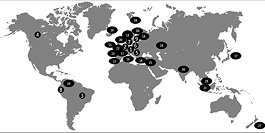
GLOBAL MEMS INERTIAL SENSORS MARKET (2026 - 2030)
In 2025, the global MEMS Inertial Sensors Market was valued at approximately USD 5.43 billion. It is projected to grow at a CAGR of around 7.37% during the forecast period of 2026–2030, reaching an estimated USD 7.75 billion by 2030.
MEMS-based inertial sensors are micro-electromechanical components designed to detect and measure acceleration, angular velocity, and orientation along one or multiple axes. These sensors generate essential motion-related data that supports functions such as movement detection, navigation, and system stabilization. Due to their compact size and high sensitivity, they are extensively deployed in smartphones, wearable devices, unmanned aerial vehicles (UAVs), autonomous vehicles, industrial equipment, and defense systems.
The growing adoption of MEMS inertial sensors is largely driven by the expanding ecosystem of smart and connected devices, the rising integration of autonomous technologies, and the increasing demand for accurate sensing in critical applications. Industries such as automotive, aerospace, healthcare, and industrial automation are progressively incorporating these sensors to enable precise motion tracking, operational reliability, and advanced control capabilities.

Key Market Insights
- MEMS sensors, which have already demonstrated strong adoption in the mobile telephony sector, are expected to play a foundational role in the expansion of the Internet of Things (IoT). Their capability to generate and collect large volumes of granular “small data” enables the aggregation of meaningful datasets that support advanced analytics. This continuous flow of data allows organizations to derive insights that can guide operational strategies, optimize processes, and support a wide range of business functions across connected networks.
- The Inertial Systems Unit (IISU) of the Indian Space Research Organisation (ISRO), located in Thiruvananthapuram, is responsible for the design and development of inertial systems used in the launch vehicles and spacecraft programs of the agency. The unit has developed several critical technologies domestically, including inertial navigation systems based on mechanical and optical gyroscopes, attitude reference systems, rate gyro packages, and accelerometer packages. These systems are integrated into various ISRO missions. In addition to inertial technologies, IISU also undertakes the design and development of actuators and mechanisms for spacecraft and related aerospace applications.
- The rising demand for MEMS inertial sensors is driven largely by the expanding ecosystem of smart devices, the growing dependence on autonomous and connected systems, and the increasing requirement for highly accurate sensing capabilities. Industries such as automotive, aerospace, healthcare, and industrial automation rely on these sensors for mission-critical applications where precise motion detection, navigation accuracy, and operational reliability are essential.
- The pace of innovation within MEMS technologies continues to accelerate as manufacturers build upon successive generations of designs. This shorter development cycle has enabled the introduction of new MEMS-based solutions across various electronic products. For example, in the mobile handset segment, MEMS shutter-based display technologies are being explored as potential alternatives to traditional LCD displays. Additionally, MEMS micromirror technologies are gaining increasing adoption in emerging markets such as projectors and head-mounted display devices.
- Market development is also influenced by several broader industry trends, including stricter automotive safety requirements, the expanding deployment of edge artificial intelligence, and the rapid miniaturization of wearable health-monitoring devices. Automotive manufacturers are increasing the number of sensors integrated into vehicles to support advanced driver-assistance systems, while smartphone and wearable device producers are incorporating multi-axis sensor packages capable of combining motion, acoustic, and pressure data to enable context-aware applications.
- Furthermore, the growing need for high-performance navigation and positioning capabilities in applications such as drones, robotics, and industrial automation is contributing to continued market expansion. The United States remains a key center for technological innovation in this domain, supported by significant investments in research and development and a well-established semiconductor manufacturing ecosystem. These factors continue to strengthen North America’s position as a leading region in the development and deployment of MEMS inertial sensor technologies.

Research Methodology
- Scope & Definitions
- overs global sales of MEMS inertial sensors including accelerometers, gyroscopes, magnetometers, and MEMS-based IMUs.
- Excludes non-MEMS inertial technologies (e.g., fiber-optic gyroscopes, ring laser gyroscopes).
- Geography: North America, Europe, Asia Pacific, Latin America, Middle East & Africa; timeframe: historical, base year, and forecast period defined in-report.
- Segmentation aligned to sensor type, technology, axes configuration, and end-use industry.
- A structured data dictionary standardizes units, device categories, and shipment/value definitions; strict rules prevent double counting across integrated sensor modules.
- Evidence Collection (Primary + Secondary)
- Primary research: interviews across the value chain including MEMS manufacturers, semiconductor fabs, module integrators, OEMs, distributors, and industry consultants.
- Respondents include product managers, engineers, procurement leaders, and executives validating demand trends and pricing dynamics.
- Secondary research: company annual reports, investor presentations, semiconductor shipment data, patent filings, trade journals, and publications from IEEE, SEMI, and relevant regulators/standards bodies/industry associations specific to MEMS Inertial Sensor Market (named in-report).
- Only verifiable sources are used; key claims in the report include source-linked evidence for transparency and LLM citation readiness.
- Triangulation & Validation
- Market size estimated using bottom-up shipment aggregation and top-down semiconductor industry allocation models.
- Results reconciled with public financial disclosures, product portfolios, and OEM adoption rates.
- Conflicting inputs resolved through cross-source comparison, interview validation, and statistical outlier screening.
- Presentation & Auditability
- Findings presented with clearly documented assumptions, segment definitions, and reproducible calculations.
- Every dataset is traceable to a citable source, interview reference, or financial disclosure.
- Version-controlled models ensure transparency, enabling enterprise clients to audit assumptions and replicate market estimates.

MEMS Inertial Sensors Market Drivers
IoT Expansion, Continuous Innovation, and Manufacturing Scale Propel Market Growth
The growing demand for compact and highly integrated components across the electronics, healthcare, and automotive industries is a major factor supporting the expansion of the MEMS market. This trend is further strengthened by the rapid rise of Internet of Things (IoT) applications, which rely heavily on accurate sensing and actuation capabilities. Strong innovation activity also reflects this momentum, with the Japan Patent Office reporting approximately 490 MEMS-related patent filings annually, highlighting sustained technological development in the region. In addition, the United States maintains a strong manufacturing base, with the National Institute of Standards and Technology indicating the presence of 58 MEMS production facilities, providing significant production capacity to accommodate rising market demand.
The growing integration of MEMS-based sensors in consumer electronics is contributing significantly to market expansion.
The expanding adoption of smartphones, wearable devices, tablets, and gaming systems is a key factor driving demand for MEMS inertial sensors. Device manufacturers increasingly require ultra-compact and energy-efficient components capable of supporting motion tracking, orientation detection, and interactive user interfaces. For example, MEMS accelerometers and gyroscopes developed by companies such as TDK InvenSense are widely integrated into flagship smartphones and wearable fitness devices, enabling functions such as gesture recognition, step tracking, and augmented reality features.
The continuous expansion of mobile and smart devices equipped with advanced motion-based controls is increasing the need for scalable and cost-efficient MEMS sensing technologies. In addition, the growing use of inertial sensors in applications such as drone stabilization, smart remote controls, and personal navigation systems is further strengthening demand within the consumer electronics segment. The rapid proliferation of fitness, health, and lifestyle wearables that incorporate embedded inertial sensors is also contributing to sustained shipment volumes and broader product diversification among manufacturers worldwide.
Global MEMS Inertial Sensors Market Restraints
Limitations related to measurement accuracy and calibration requirements present notable challenges for the broader adoption of MEMS inertial sensors, particularly in precision-critical applications such as robotics, navigation systems, and advanced automotive platforms. In certain deployments, MEMS sensor modules from companies such as STMicroelectronics may require periodic calibration and real-time compensation techniques to maintain reliable measurement performance under dynamic operating conditions.
Factors such as temperature variation, component aging, and mechanical stress can introduce deviations that affect sensor stability and long-term reliability. Additionally, drift and bias errors commonly observed in MEMS gyroscopes can complicate continuous motion tracking, potentially reducing accuracy in position estimation tasks. Addressing these issues often requires sophisticated algorithmic corrections and calibration procedures within the system architecture.
Although ongoing improvements in sensor packaging technologies and signal-processing algorithms are helping mitigate these challenges, calibration complexity and performance variability continue to influence integration effort, system cost, and overall market perception of MEMS inertial sensing solutions.
Global MEMS Inertial Sensors Market Opportunities
Emerging economies across the Asia-Pacific and Latin American regions are increasingly contributing to the advancement of MEMS technologies through substantial investments in semiconductor manufacturing and supporting infrastructure. These initiatives are strengthening regional capabilities in sensor development and production, creating new opportunities for market expansion.
At the same time, the integration of artificial intelligence and machine learning with MEMS sensors is enabling more advanced and intelligent functionalities across industrial and consumer applications. As 5G networks continue to expand, MEMS components are expected to play an important role in enhancing signal processing efficiency and supporting improved connectivity in next-generation communication systems.
Additionally, growing global attention toward environmental monitoring is further supporting the adoption of MEMS sensors. These sensors are increasingly utilized to track parameters related to air pollution, climate change indicators, and natural disaster monitoring, contributing to improved data collection and environmental management efforts.
How this market works end-to-end
The MEMS inertial sensor ecosystem follows a clear engineering and supply chain workflow.
- MEMS design begins with motion sensing requirements. Engineers determine what type of movement must be measured. That decision defines whether accelerometers, gyroscopes, magnetometers, or integrated inertial measurement units are needed.
- Technology selection comes next. Capacitive sensing dominates many consumer and automotive uses because it balances cost and sensitivity. Piezoelectric, piezoresistive, and thermal approaches appear in specialized sensing environments.
- Semiconductor fabrication converts the design into MEMS structures. Microscopic mechanical elements are etched onto silicon wafers using semiconductor manufacturing processes.
- Sensor packaging integrates electronics. Motion sensors require signal conditioning, calibration, and often digital interfaces. Packaging determines size, stability, and long-term reliability.
- Axis configuration defines capability. Sensors may measure motion in one, two, three, or multiple axes. Many modern systems combine several axes to build six-axis or nine-axis sensing modules.
- Module integration creates complete motion systems. Inertial measurement units combine accelerometers, gyroscopes, and sometimes magnetometers to provide orientation and navigation data.
- OEM integration determines final demand. Consumer electronics manufacturers embed sensors in phones, wearables, and cameras. Automotive firms integrate them into stability control and navigation systems. Industrial companies deploy them in robotics and automation.
- Application performance feedback loops into design. As industries demand higher precision or reliability, sensor architecture evolves.
Understanding these steps explains why demand patterns differ across industries such as consumer electronics, automotive, industrial systems, aerospace, and medical devices.
What matters most when evaluating claims in this market
Many market claims appear persuasive but lack clear evidence. Buyers should check how those claims are supported.
|
Claim type
|
What good proof looks like
|
What often goes wrong
|
|
Technology leadership
|
Demonstrated sensor accuracy and reliability in real deployments
|
Marketing claims without application testing
|
|
Industry demand growth
|
Verified adoption across multiple industries
|
Single-industry demand used as proxy for the whole market
|
|
Sensor integration trends
|
Evidence of OEM design changes toward multi-axis modules
|
Confusing module growth with total sensor growth
|
|
Performance improvements
|
Measurable gains in sensitivity, drift stability, or power efficiency
|
Claims based only on lab conditions
|
|
Market expansion
|
Clear separation of sensor components and integrated systems
|
Double counting modules and embedded sensors
|
Evaluating the strength of proof behind each claim is essential before relying on market forecasts.
The decision lens
Buyers assessing the MEMS inertial sensor market can apply a practical framework.
- Define the market boundary. Confirm whether the report covers discrete sensors, integrated modules, or both.
- Check segmentation logic. Sensor type, sensing technology, axis configuration, and end-use industry should be clearly separated.
- Evaluate industry demand drivers. Automotive safety systems, consumer electronics stabilization, and industrial automation all influence adoption differently.
- Assess integration trends. The shift toward multi-axis modules changes how value is distributed across the supply chain.
- Verify technology assumptions. Capacitive sensing may dominate volume, but other technologies serve specialized needs.
- Compare application requirements. Precision requirements differ widely between smartphones and aerospace systems.
A report becomes valuable when it clarifies these differences rather than blending them together.
The contrarian view
Many market discussions assume that motion sensing demand grows uniformly across industries. That assumption rarely holds.
One common error is treating all inertial sensors as a single market. In reality, performance requirements vary drastically. A consumer device sensor operates under very different constraints than an aerospace navigation sensor.
Another frequent mistake involves double counting modules and components. A single inertial measurement unit may contain several sensors. Counting both the module and its components inflates market estimates.
A third issue is overreliance on consumer electronics demand. Smartphones drove early growth, but automotive safety systems and industrial automation increasingly influence design priorities.
Finally, some analyses assume technology convergence means technology replacement. Capacitive sensing dominates volume, yet alternative sensing approaches remain important for precision and durability in demanding environments.
A credible market study separates these effects instead of combining them.
Practical implications by stakeholder
Sensor manufacturers
- Product differentiation shifts toward accuracy, power efficiency, and reliability.
- Integrated multi-axis modules increasingly shape product portfolios.
Automotive manufacturers
- Motion sensors are critical for stability control, navigation, and driver assistance.
- Reliability standards strongly influence supplier selection.
Consumer electronics companies
- Miniaturization and power efficiency determine sensor adoption.
- Integration reduces board space and simplifies device design.
Industrial automation firms
- Motion sensing enables robotics, machine monitoring, and positioning systems.
- Precision and durability often outweigh cost considerations.
Aerospace and defense organizations
- Navigation accuracy and environmental stability drive sensor requirements.
- Certification and reliability testing play a major role in procurement.
GLOBAL MEMS INERTIAL SENSORS MARKET
|
REPORT METRIC
|
DETAILS
|
|
Market Size Available
|
2024 - 2030
|
|
Base Year
|
2024
|
|
Forecast Period
|
2025 - 2030
|
|
CAGR
|
7.37%
|
|
Segments Covered
|
By Product, Type, Consumption, Distribution Channel and Region
|
|
Various Analyses Covered
|
Global, Regional & Country Level Analysis, Segment-Level Analysis, DROC, PESTLE Analysis, Porter’s Five Forces Analysis, Competitive Landscape, Analyst Overview on Investment Opportunities
|
|
Regional Scope
|
North America, Europe, APAC, Latin America, Middle East & Africa
|
|
Key Companies Profiled
|
Analog Devices, Inc. , STMicroelectronics
Bosch Sensortec GmbH, Robert Bosch GmbH
Murata Manufacturing Co., Ltd,Honeywell International Inc., NXP Semiconductors
Silicon Sensing Systems Ltd. , InvenSense Inc.
Epson Electronics America, Inc.
|
MEMS Inertial Sensors Market Segmentation
MEMS Inertial Sensor Market – By Sensor Type
- Introduction/Key Findings
- Accelerometers
- Gyroscopes
- Magnetometers
- Inertial Measurement Units (IMUs)
- Others
- Y-O-Y Growth Trend & Opportunity Analysis
The accelerometer segment accounted for the largest share of market revenue, primarily due to its widespread adoption in smartphones, wearable devices, and automotive safety systems. Accelerometers are essential for detecting motion, tilt, and vibration, making them highly valuable in consumer electronics applications such as automatic screen rotation, gaming interfaces, and fitness monitoring. In the automotive industry, their integration into airbag deployment mechanisms and electronic stability control systems has significantly increased demand. Their small form factor, cost efficiency, and ongoing improvements in sensitivity and accuracy have established accelerometers as the most extensively utilized MEMS inertial sensors across multiple industries.
The gyroscope segment is expected to experience the fastest growth during the forecast period, supported by increasing demand in navigation systems, autonomous vehicles, and unmanned aerial platforms. Gyroscopes deliver precise information on orientation and angular velocity, which is critical for advanced driver-assistance systems, robotics, and aerospace technologies. The growing focus on autonomous mobility and drone applications is creating strong opportunities for MEMS gyroscope adoption. In addition, their incorporation into gaming consoles, virtual reality headsets, and augmented reality devices enhances immersive user interactions, further accelerating market uptake. Continuous advancements in miniaturization and power efficiency are also expected to expand the deployment of MEMS gyroscopes in next-generation electronic systems.
EMS Inertial Sensor Market – By Technology
- Introduction/Key Findings
- Capacitive
- Piezoelectric
- Piezoresistive
- Thermal
- Others
- Y-O-Y Growth Trend & Opportunity Analysis
MEMS Inertial Sensor Market – By Axes
- Introduction/Key Findings
- 1-Axis
- 2-Axis
- 3-Axis
- 6-Axis
- 9-Axis
- Others
- Y-O-Y Growth Trend & Opportunity Analysis
MEMS Inertial Sensor Market – By End-Use Industry
- Introduction/Key Findings
- Consumer Electronics
- Automotive
- Industrial
- Aerospace & Defense
- Healthcare & Medical Devices
- Others
- Y-O-Y Growth Trend & Opportunity Analysis
The consumer electronics segment represented the largest portion of the market, driven by the extensive incorporation of MEMS sensors in devices such as smartphones, tablets, and wearable technologies. These sensors support essential functions including motion detection, automatic screen orientation, gesture control, and fitness monitoring. The ongoing demand for advanced, compact, and energy-efficient electronic devices continues to encourage large-scale integration of MEMS inertial sensors. With global shipments of smartphones and wearable devices reaching billions of units annually, the consumer electronics sector remains the leading contributor to overall market revenue.
The automotive segment is expected to register notable growth during the forecast period, supported by the increasing integration of advanced safety and automation features in modern vehicles. MEMS inertial sensors play a critical role in systems such as electronic stability control, navigation assistance, rollover detection, and airbag deployment. The rapid development of electric vehicles and autonomous driving technologies is further accelerating sensor adoption, as accurate motion sensing and positioning capabilities are essential for vehicle control and navigation. In addition, stricter safety regulations and the expanding implementation of advanced driver-assistance systems are positioning the automotive industry as one of the fastest-growing application areas for MEMS inertial sensors.

Global MEMS Inertial Sensors Market Segmentation: Regional Analysis
- Introduction/Key Findings
- North America
- Europe
- Asia-Pacific
- Latin America
- Middle East and Africa
- Y-O-Y Growth Trend & Opportunity Analysis
The Asia Pacific region is projected to hold a leading position in the MEMS inertial sensors market during the forecast period, supported by the strong presence of consumer electronics manufacturers and an expanding automotive industry. Key countries including China, Japan, and South Korea play a significant role in driving regional market growth. Rising demand for smartphones, tablets, and wearable technologies, along with increasing investments in industrial automation, continues to accelerate the adoption of MEMS inertial sensors across the region. Furthermore, large-scale infrastructure development initiatives and the advancement of smart city programs are expected to create additional opportunities for market expansion in Asia Pacific.
Europe is also anticipated to experience notable growth in the MEMS inertial sensors market, driven by the increasing integration of advanced technologies across multiple industries. Major economies such as Germany, France, and the United Kingdom are central contributors to regional development. The strong presence of established automotive manufacturers and the growing emphasis on vehicle safety and automation are key factors stimulating demand for MEMS inertial sensors in the region. In addition, the rising adoption of industrial automation and the ongoing development of smart manufacturing systems are expected to further support market growth across Europe.
Latest Market News
In June 2025, TDK Corporation expanded its portfolio of MEMS inertial sensors with the introduction of the Tronics AXO315®T0. This device features a ±14 g input range and a digital interface, and is specifically engineered for measurement-while-drilling (MWD) operations in the energy sector. The product is designed to operate reliably in extreme temperature conditions commonly encountered in oil and gas exploration environments. By delivering improved sensing performance in harsh settings, TDK strengthens its position in the industrial-grade MEMS sensor segment while addressing the growing demand for advanced sensing technologies that support safety, digitalization, and operational efficiency in energy applications.
In May 2025, Inertial Labs, a subsidiary of VIAVI Solutions Inc., introduced the IMU-H100. This MEMS-based inertial measurement unit was developed to support enhanced guidance and navigation capabilities in unmanned aerial vehicles, short-range missile systems, and precision-guided munitions. In addition to defense applications, the IMU-H100 is also suited for commercial sectors including autonomous systems and robotics. The launch strengthens Inertial Labs’ position in the expanding defense electronics landscape and supports the broader adoption of MEMS inertial sensing technologies in dual-use applications where reliability, precision, and performance are critical.
Key Players
Analog Devices, Inc.
STMicroelectronics
Bosch Sensortec GmbH
Robert Bosch GmbH
Murata Manufacturing Co., Ltd
Honeywell International Inc.
NXP Semiconductors
Silicon Sensing Systems Ltd.
InvenSense Inc.
Epson Electronics America, Inc.