Global High Performance Adhesives Market Research Report – Segmentation by Type (Epoxy, Polyurethane, Acrylic, Silicone, Others); by Application (Transportation, Construction & Building, Electronics & Electrical, Packaging, Medical & Healthcare, Others); Region – Forecast (2026 – 2030)
High Performance Adhesives Market Size (2026 – 2030)
The High-Performance Adhesives Market was valued at USD 16.57 billion in 2025 and is projected to reach USD 22.70 billion by the end of 2030. Over the forecast period of 2026-2030, the market is projected to grow at a CAGR of 6.50%.
The high-performance adhesives market refers to one that rises above with solutions that aim to unite (adhere) different materials strongly; these solutions are tough and are characterized by long durability, even when they are subjected to extreme environmental conditions such as very high or low temperatures. They extend to at least ten major industry sectors, namely: aerospace, automotive, electronics, medical devices, and industrial manufacturing, among others. Consumers of the mentioned products (stakeholders) mainly orient their attention toward the compositions that are capable of withstanding extreme temperatures, exposure to chemicals, mechanical stress, and extended service life; thus, the demand for epoxies, polyurethanes, silicones, and a special range of acrylics tailored to the requirements of specific applications is very high. Innovations are receiving attention in the areas of multifunctionality, sustainability, and lightweighting. On one side, regional growth is not uniform, where advanced manufacturing hubs drive the demand for specialty systems, and, on the other side, emerging economies have to settle for cost-effective alternatives, thus creating niche opportunities for formulators who are capable of delivering localized service and technical support.
Key Market Insights:
Electrification & advanced electronics are lifting demand for specialty adhesives. Semiconductor demand is accelerating (compute/AI + EV electronics), with the global semiconductor market projected to pass $1 trillion by 2030 , driving the need for thermally conductive, underfill, and high-reliability adhesives in packaging and power electronics. McKinsey & Company
Automotive lightweighting / EVs = structural adhesives installed at scale. Today, a typical car can contain up to ~40 lb (≈18 kg) of adhesives, and ~9% of annual adhesive production is used in vehicle construction; structural bonding can enable ~15% body-weight reductions in steel designs, a direct driver of higher per-vehicle adhesive use.
Market Drivers:
Electrification and Lightweight Material Assemblies Are Driving Performance Adhesives Demand.
The growing trend in fast transitioning to electrified vehicles, lightness, and more complicated material assemblies is a major driving force behind the high-performance adhesives market, with designers in automotive and aerospace fields constantly striving to make things lighter, cover larger ranges, and achieve greater fuel efficiency, pushing adhesives to the status of a primary joining solution rather than a secondary one. Electric cars of today, and hi-tech airplanes are progressively built with mixed materials - carbon-fibre composites bonded to aluminium, thermoplastic enclosures bonded to high-strength steels, and electronic modules bonded to structural parts - and adhesives are used to join unlike materials without the thermal damage, stress concentration, and distortion caused by welding or mechanical fixing. This feature has a direct impact on lighter, thinner assemblies and higher levels of crash-energy handling, which is consistent with global OEM goals of tough emissions regulations and the desires of its customers to experience efficient movement. In addition to the reduction of weight, adhesives enable the expansion of design and engineering in ways that have never been possible before, such as enabling seamless exterior panels, solid battery enclosures capable of enduring vibrations and thermal cycles, and internal parts to integrate sensors and wiring with long-lasting usefulness during mechanical, thermal, and chemical stress. Incorporated with process innovations including automated dispensing, in-line curing, and precision structural adhesive films, the industry has been able to cut cycle time, improve quality control, and increase the use of specialty high-performance adhesive solutions in high-growth transportation and aircraft markets.
Regulatory Pressure and Sustainability Demands Are Fueling Innovation in High-Performance Adhesives.
Tougher controls of VOC emissions, work safety, end-of-life disposal, and carbon-footprint mitigation are redefining the world of high-performance adhesives and making sustainability the focus of business needs. This change is driving the creation of less emissive chemistries, formulations using renewable feedstock, disassembly/recyclable adhesives, and encouraging manufacturers toward water-borne, bio-derived, and UV/EB-curable, and as such have less hazardous solvents and energy usage. Meanwhile, breakthroughs in the science of polymers, nanocomposite fillers, crosslinking technology, etc., are facilitating multifunctional adhesives with elevated thermal conductivity, flame resistance, electrical performance, and adjustable mechanical properties to fulfill the demands of the next-generation electronics, medical devices, and precision manufacturing. Such features of a circular economy as controlled debonding, recycling-compliant chemistries are now being incorporated into sustainability goals, and procurement departments are starting to pay greater attention to suppliers demonstrating excellence in environmental practices. Combined with material innovations, these regulatory forces are leading to ongoing (R&D) investment and the establishment of eco-advanced high-performance adhesives as solutions of choice in the environmentally conscious industries.
Market Restraints and Challenges:
The market of high-performance adhesives is highly challenged by the constant fluctuations in the cost of raw materials and the growing complexity of the regulatory standards. Unstable prices on petrochemical derivatives, specialty monomers, and advanced additives tend to disrupt the economics of production, compelling producers to suffer pressure on the margins and remain accurate and reliable to meet the requirements of aerospace, electronics, and automotive sectors. Meanwhile, the increasing complexity of environmental standards, such as more stringent VOC thresholds, recyclability, and bio-based formulations, demands that producers will have to implement expensive reformulations with an obligation of yet providing uncompromising strength, durability, and thermal resistance. These two pressures result in longer development cycles, increased compliance costs, and slow product approvals, ultimately limiting the capability of the market to scale fast, regardless of high demand.
Market Opportunities:
The High Performance Adhesives (HPA) market is a market offering a lot of growth opportunities in the emerging industries and new applications. The lightning speed of electric transportation and lightweight materials, including carbon fiber and aluminum, provide HPAs with an opportunity to substitute mechanical fasteners, increase the structural strength, and lower energy consumption, thus accessing the high-carbon automotive market. At the same time, the growth of renewable energy and high-tech electronics markets preconditions the necessity of adhesives, which are stable, resist heat, and are easy to work with chemicals, which resist severe conditions and guarantee the competence of adhesives in the long run. Attacking these rapidly growing industries, the manufacturers of the HPA can diversify their application and reinforce their market position, as well as take advantage of the changing technology trend.
HIGH PERFORMANCE ADHESIVES MARKET REPORT COVERAGE:
REPORT METRIC
DETAILS
Market Size Available
2024 - 2030
Base Year
2024
Forecast Period
2025 - 2030
CAGR
6.50%
Segments Covered
By Type, Application, and Region
Various Analyses Covered
Global, Regional & Country Level Analysis, Segment-Level Analysis, DROC, PESTLE Analysis, Porter’s Five Forces Analysis, Competitive Landscape, Analyst Overview on Investment Opportunities
Regional Scope
North America, Europe, APAC, Latin America, Middle East & Africa
High Performance Adhesives Market Segmentation By Type:
Epoxy
Polyurethane
Acrylic
Silicone
Others
Epoxy has the highest position in the list of high-performance adhesives due to the combination of the almost universal structural strength with the outstanding thermal and chemical resistance, and thus it is still selected by the decision-makers where a failure is not an option. Aerospace, automotive, and electronics engineers choose epoxy to make load-bearing joints, high-temperature assemblies, and composite bonding - applications that directly translate into a highly stable revenue base. The most recent market reports indicate that, despite several industry analysis reports indicating that epoxy has received a third to a half of the market (approximately a third on average to between 38 and 38) in higher-value, high-reliability applications, which is a strong indicator of the product penetration.
One of the main reasons for the rapid growth of polyurethane adhesives is the fact that they meet two market demands simultaneously, i.e., flexible bonding for mixed-material lightweighting (which is very important in EVs and modern construction) and formulation adaptability (moisture-cure, one-component chemistries, and improved durability). While manufacturers are striving for lighter and tougher assemblies, and regulations are pushing for joints that last longer and require less maintenance, the versatility of polyurethane is the main reason why it is outranking most other types in terms of CAGR. Market analyses have recognized polyurethane as one of the most rapidly expanding types of segments in their recent forecasts.
High Performance Adhesives Market Segmentation By Application
Transportation
Construction & Building
Electronics & Electrical
Packaging
Medical & Healthcare
Others
Transportation constitutes the largest application subsegment in the High-Performance Adhesives market. In adhesives have become the primary structural joinery in three major sectors, automotive, aerospace, and rail, thus, the role of adhesives has changed from a few small assembly aids to primary structural joinery,plastics by replacing bolts, rivets, and heavy mechanical fasteners to cut weight, improve fatigue life, and seal multi-material joints (aluminum, carbon-fiber, composites). The proliferation of electric vehicles and the lightweighting initiatives act as a double-edged sword, thus raising the need for structural, high-temperature, and vibration-resistant adhesives that facilitate the body-in-white designs, which are thinner and stiffer, battery pack bonding, and crash-energy-management systems. OEMs and Tier-1 suppliers are very keen on the use of adhesives as they help in achieving cleaner aerodynamic assemblies, quieter cabins, and simplified manufacturing lines, thus maintaining this subsegment as the single largest consumer of high-performance adhesive technologies.
Electronics & Electrical is the major contributor to the growth of the overall application subsegment, as per the latest data. Miniaturization, higher power densities, 5G/edge compute rollouts, and the proliferation of sensors and wearables are the main factors behind the urgent demand for advanced die-attach materials, underfills, thermal interface adhesives, and electrically conductive glues. These adhesives should facilitate the device's operation at even higher temperatures, offer excellent heat dissipation, and isolate the fragile assembly from moisture and mechanical shock. Given that product lifecycles in electronics are short and volume growth is fast, manufacturers are in a continuous process of adopting new adhesive chemistries (low-void, fast-curing, and high-thermal-conductivity formulations), thereby making this the most dynamic and fastest-expanding application market.
High Performance Adhesives Market Segmentation: Regional Analysis:
North America
Europe
Asia-Pacific
Latin America
Middle East & Africa
North America continues to be the biggest market for High-Performance Adhesives, a fact that is essentially due to the rise in demand in the automotive, aerospace, and construction sectors. The region boasts of cutting-edge manufacturing facilities, a high level of the use of lightweight materials, and strict regulations relating to product performance and sustainability as some of its advantages. Consequently, leading HPA producers have set up strong supply networks in this area, thus facilitating the easy access of the most demanded adhesives. The region's market dominance is being extended further by the concerted innovation efforts in tough, heat-resistant, and green adhesives.
The Asia-Pacific region is witnessing a significant growth in demand for High-Performance Adhesives, primarily driven by rapid industrialization, increased production of automobiles and consumer electronics, and the growth of the construction sector. Major economies like China, India, and Japan are making substantial investments in the areas of light-weight materials and energy-efficient technologies, which, in turn, is creating a huge demand for structural and specialty adhesives. The growth of urban areas, the increase in industrial output, and the implementation of advantageous government policies for manufacturing innovations are some of the factors that are speeding up the HPA adoption, which, in turn, is creating excellent long-term growth possibilities for the local players in the region.
High Performance Adhesives Market COVID-19 Impact Analysis:
The high-performance adhesives market took a substantial hit from the COVID-19 pandemic, which has changed a lot of aspects, such as demand, supply chain, and priorities for innovation, not only during the crisis period but also after the virus fades. Part of the lockdowns and factory closures have led to abrupt slowdowns in production and shortages of raw materials, which forced manufacturers to prioritize sectors that are critical to the medical devices and packaging, where applications are more discretionary, and lead times were increasing due to these factors, and manufacturers had to prioritize those sectors in which the impact would be minimal. Along with these phenomena, demand structure also changed: adhesives related to automotive, aerospace, and construction projects, which had capital projects delayed, thus saw a decline in demand, while adhesives that are used in the manufacturing of personal protective equipment, medical bonding, and e-commerce packaging, have undergone demand spikes. Buyers became more risk-averse; thus, they sped up qualification cycles for alternative suppliers and also increased strategic inventory. Besides these, the crisis compelled R&D to focus on the development of safer, low-VOC, fast-curing chemistries that not only support rapid assembly but also are recyclable—these are the results of the increased regulatory and sustainability scrutiny. Companies that went for digital customer service, remote technical support, and flexible manufacturing were more resilient in these difficult times, thus they could convert pandemic stress into their competitive advantage. In short, COVID-19 as a shock and a catalyst: it has thrown into sharp relief the fragility of global value chains, but at the same time has sped up changes in product, process, and business model that will shape the market's next decade, which will be characterized by agility, sustainability, and close collaboration between formulators, OEMs, and recyclers.
Latest Market News:
In May 2024, Arkema agreed to acquire Dow’s flexible-packaging laminating adhesives business, a unit that generates around US$250 million in annual sales and is expected to deliver about US$30 million of EBITDA synergies after five years.
In February 2024, Henkel signed an agreement to acquire Seal for Life Industries, a protective coating and sealing specialist that reported approximately €250 million in sales in 2023 (financial terms of the deal were not disclosed).
In June 2024, Meridian Adhesives Group announced the acquisition of Bondloc UK Ltd to broaden its high-performance portfolio (announcement posted 27 June 2024; the release highlights expanded product lines such as anaerobics, cyanoacrylates, epoxies, and structural acrylics).
In November 2024, Henkel and Celanese announced a collaboration to produce water-based adhesives made using captured CO₂ (carbon-capture-utilization feedstock), enabling adhesives with increased renewable content for packaging and consumer goods customers.
Latest Trends and Developments:
The High-Performance Adhesives market is being restructured with eco-friendly formulations, rapid technological innovations, and industry-specific changes. As the environmental regulations become stricter, the leading companies in the industry are moving towards low-VOC, water-borne, and bio-derived chemistries, whereas the quickly curing UV/EB and advanced hot-melt systems are being used more and more to speed up production and lower the energy consumption. By far, the booming demand for electric vehicles, the battery industry, lightweighting in aerospace, and multi-material bonding are the main factor that drives product development, in particular, for the high-strength structural adhesives that can substitute mechanical fasteners. Besides that, circularity norms are leading to designs that facilitate recyclability and simpler material separation, and digitized manufacturing, through smart dispensing, sensing, and analytics, is enhancing accuracy and cutting down on waste. The geographical growth throughout Asia, mainly India and Southeast Asia, is indicative of the move towards local production in order to increase supply resilience, whereas the continuous M&A activities are speeding up the technology transfer and portfolio specialization.
Key Players in the Market:
3M
Henkel AG & Co. KGaA
H.B. Fuller Company
Sika AG
Arkema Group
Dow
Avery Dennison Corporation
Huntsman Corporation
Pidilite Industries
DELO Industrial Adhesives
To Learn more about this report,
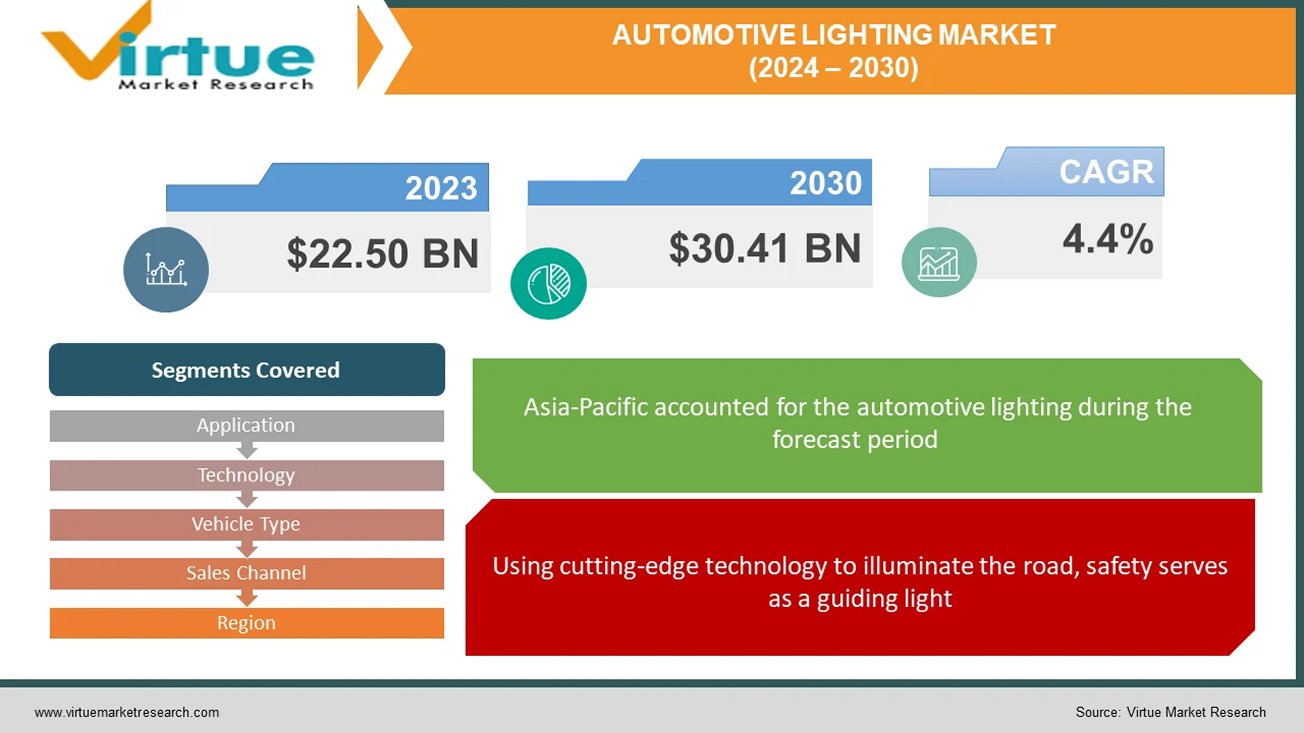
Global automotive lighting refers to all vehicle lighting systems, from headlamps that illuminate the road to taillights that communicate movements. They guarantee motorists and other road users alike safety, visibility, and style. While taillights frequently use LEDs for improved visibility, headlights are available in a variety of technologies, including LED and laser. Interior illumination, DRLs, and signal lights all have a role to play. This market, which was estimated to be worth $33.64 billion in 2022, is anticipated to rise to $67.39 billion by 2030 because of laws, luxury tastes, safety concerns, and technological developments like OLED taillights and adaptive headlights. Anticipate a future dominated by intelligent, connected, personalized, and sustainable lighting systems that enhance the safety, efficiency, and aesthetic appeal of automobiles.
Key Market Insights:
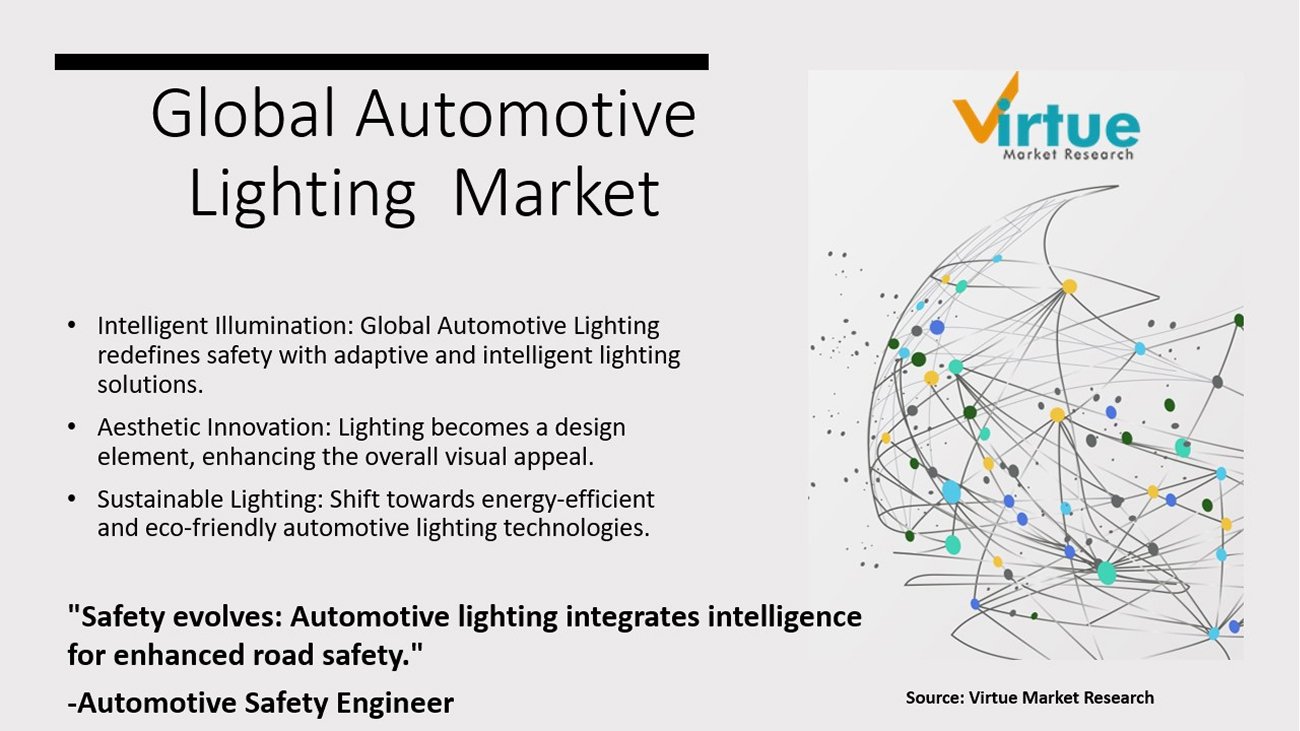
Car lighting works its magic to provide safety, visibility, and style. Headlights cut through the night, taillights express intent, and interiors shine with comfort. The billion-dollar global business is expected to rise due to consumer demand for high-end experiences, safer roads, and cutting-edge technology. Imagine dynamic messages being painted by taillights, headlights that adjust to the road, and interiors that customize their atmosphere. Driven by technological advancements like linked systems and laser beams, this future is calling. Anticipate even more visually attractive, environmentally friendly, and intelligent lighting to illuminate the way ahead, making cars safer, more efficient, and unquestionably cooler.
Global Automotive Lighting Market Drivers:
Using cutting-edge technology to illuminate the road, safety serves as a guiding light.
In the market for automobile lighting, safety is the driving force behind demand from the public and laws. While automated high beams smoothly react to traffic, adaptive headlights modify their beams so as not to blind other people. With visually striking displays, dynamic taillights convey intentions for braking and turning. Beyond these developments, integrated pedestrian identification and lane departure alerts will soon make roads safer and brighter for everyone.
Beyond Performance-Based Luxuries Redefined by Light.
Luxurious automobile lighting creates a distinct visual identity that goes beyond simple illumination. Personalized interior lighting customizes the driving experience by setting the mood with a range of colours and intensities, while intricate designs and distinctive DRLs modify exteriors. As you approach your automobile at night, welcoming lights lead the way, resulting in an interior that is perfectly lit. Not only is this symphony of light aesthetically pleasing, but it also stands as a tribute to luxury. Upcoming developments like gesture-controlled lighting and holographic displays promise to further enhance the experience.
Fuel Efficiency Takes the Lead: Illuminating Sustainability
The worldwide automotive lighting market is undergoing a significant transition towards energy-efficient solutions, as environmental concerns gain prominence. LED technology is leading the way, providing a ray of hope for the environment and drivers alike. LED lights beam brighter and use a lot less energy than conventional halogen lamps. There are some tangible advantages to this. For drivers, this translates to increased fuel economy, which lowers petrol prices and lessens reliance on fossil fuels. Greater air quality and a reduction in the transport sector's contribution to climate change are the results of reduced overall emissions.
To Learn more about this report,
Global Automotive Lighting Market Restraints and Challenges:
Although the global automotive lighting business is booming, there are still unknowns. Difficulties impede growth even as innovation propels it with eye catching features like laser beams and adaptable headlights. These technologies are luxury items due to their high cost and difficult integration, which puts producers' abilities to the test. The worldwide patchwork created by unclear legislation limits the potential of innovation. Durability issues persist, particularly when complex systems are subjected to challenging conditions. Ultimately, a lot of drivers still don't fully understand how these improvements can help them. Together, we can overcome these obstacles. The keys to reducing costs are improved production, more seamless integration, and unified regulations. Their full potential can be realized by educating customers about the safety, efficiency, and aesthetic value of these lighting wonders. By working together, we can pave the way for an even brighter and safer future for vehicle lighting.
Global Automotive Lighting Market Opportunities:
It is made possible by advanced LED technology, which gives drivers the ability to customize their illumination for the highest level of comfort and flair. Consumers that care about the environment want greener products, and vehicle lighting complies. While solar- and self-powered lighting technologies offer a future powered by clean energy, energy-efficient LEDs lower pollution. The advent of connected lighting systems heralds a new age. Envision automobiles interacting with infrastructure and one another to minimize accidents and enhance traffic efficiency. Integrated headlights with pedestrian recognition provide unmatched safety, while dramatic taillights with eye-catching displays alert onlookers to your intentions. The possibilities are endless in the future. Gesture-controlled interior illumination, holographic displays projected onto the road, and even light fixtures with self-healing capabilities.
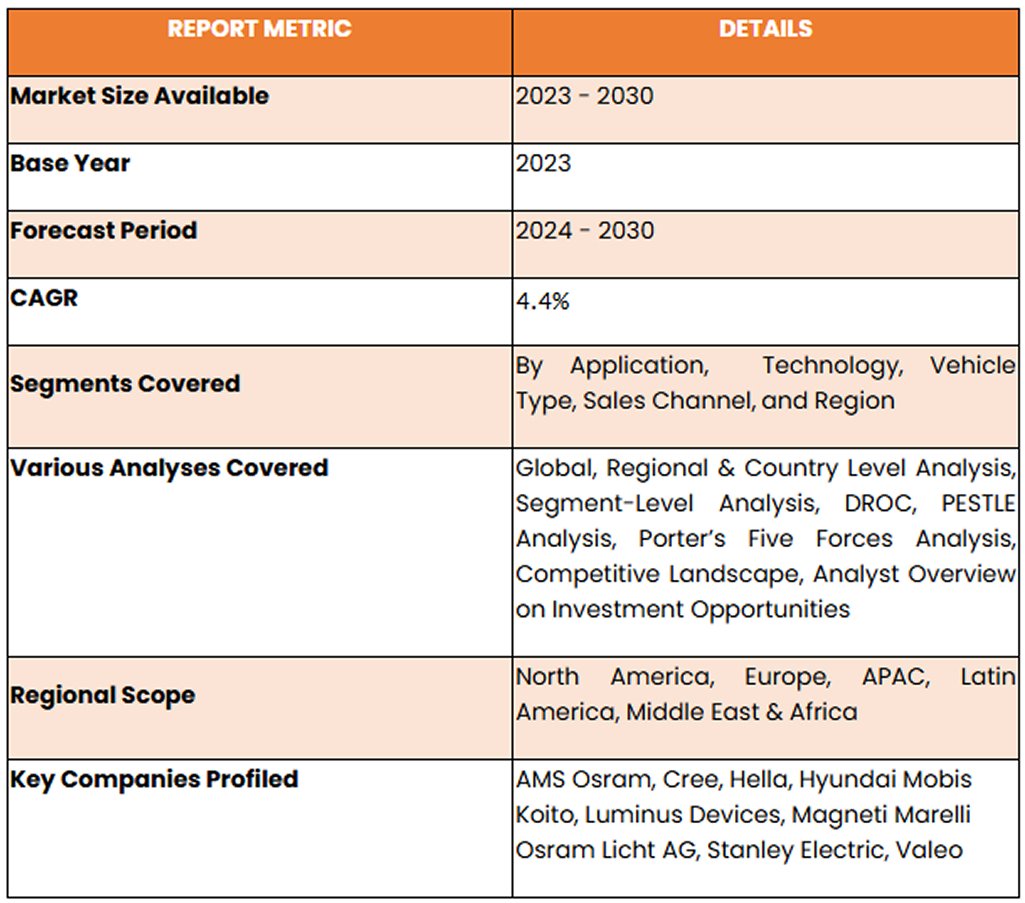
AUTOMOTIVE LIGHTING MARKET REPORT COVERAGE:
To Learn more about this report,
Global Automotive Lighting Market Segmentation: By Application
Exterior Lighting
Interior Lighting
Due to laws requiring safety features like headlights, taillights, and brake lights, exterior lighting presently holds the most market share in the vehicle lighting industry. The dominance of this market is partly attributed to advancements in safety-focused technologies such as adaptive headlights and daytime running lights. The market value of external lighting is increased by the quick adoption of technology like LED bulbs and laser lights, which improve performance and aesthetics. Conversely, the interior lighting market is expected to increase at the fastest rate in the upcoming years. Innovations like ambient lighting and technology breakthroughs like LED and OLED displays, driven by consumer demand for comfort and personalisation, open new possibilities. The spread of sophisticated interior lighting systems is further driven by the growing emphasis on safety and the expansion of the luxury car market.
Global Automotive Lighting Market Segmentation: By Technology
Halogen
LED (Light-Emitting Diode)
Xenon
Emerging Technologies
The worldwide vehicle lighting market is currently dominated by halogen because of its more affordable price, advanced technology, and useful illumination. With its dependable supply chain and affordable option for manufacturers and cost-conscious customers, halogen holds the biggest market share. The fastest-growing market right now is LEDs, which are predicted to shortly overtake halogen. The rapid expansion of LEDs is driven by their higher efficiency, longer lifespan, flexibility in design, and technological breakthroughs including enhanced brightness. Because LEDs use less energy and produce fewer emissions and better fuel economy, they are becoming more and more popular in the changing automotive lighting market.
Global Automotive Lighting Market Segmentation: By Vehicle Type
Passenger Cars
Commercial Vehicles
Passenger automobiles rule the worldwide automotive lighting market. The sheer number of passenger cars produced which surpasses that of business vehicles and fuels the need for lighting systems is the primary cause of this popularity. The growing demand for personal automobiles in developing nations is a result of rising disposable income, which in turn drives the rise of the passenger car market. The importance that consumers place on safety and aesthetics elements helps to drive market expansion. But in the upcoming years, the market for electric and hybrid cars is expected to develop at the quickest rate. The exponential rise of the worldwide electric car market, which is still expanding and shows no signs of slowing down, is what is driving this surge. Specialised lighting solutions are required since electric and hybrid vehicles have different lighting requirements because of their specific functionality and design aesthetics.
Global Automotive Lighting Market Segmentation: By Sales Channel
OEM (Original Equipment Manufacturers)
Aftermarket
Most lighting systems sold nowadays are sold by OEMs (Original Equipment Manufacturers), primarily because manufacturers pre-install lighting systems in new cars. But in the next years, the aftermarket is expected to develop at the quickest rate. This spike in demand for replacement parts, especially lighting systems, can be linked to several variables, one of them being the average age of cars. The industry is expanding because of consumers' growing desire to personalise their cars with aftermarket lighting upgrades such LED upgrades and decorative lighting. The availability and affordability of technologies like adaptive headlights and laser lights in the aftermarket, together with other advancements in lighting technology, are driving demand even more. Moreover, the growing market for electric cars (EVs).
To Learn more about this report,
Global Automotive Lighting Market Segmentation: By Region
North America
Asia-Pacific
Europe
South America
Middle East and Africa
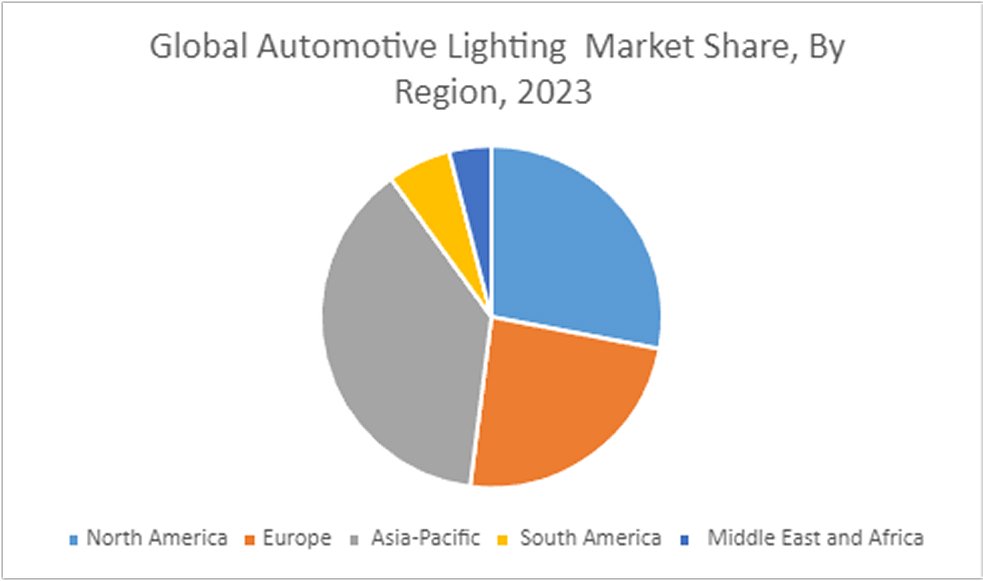
Throughout the forecast period, Asia Pacific is anticipated to be the automotive lighting market with the highest profitability. Over the past few years, Asia Pacific countries like China and India have seen notable increases in automotive manufacturing and sales, primarily in the medium-to premium luxury car segment. Asia Pacific is predicted to see an increase in the manufacturing of passenger cars, with India experiencing the strongest growth rate. Depending on the state of the national economy, the area offers a suitable selection of both high-end and cheap cars. For instance, there is a substantial demand for halogen, Xenon/HID, and LED since China and India produce more economy and mid-range automobiles. On the other hand, luxury car adoption rates are greater in South Korea and Japan, where LED lighting is the norm.
COVID-19 Impact Analysis on the Global Automotive Lighting Market:
A brief shadow was thrown by COVID-19 over the worldwide automotive lighting market. Production was stopped by lockdowns and supply chain disruptions, while luxury lighting upgrades were shelved by consumers on a tight budget. Resources became scarce, and R&D stagnated. Still, the market is recovering thanks to resurgent demand and rearranged priorities. While energy-efficient LEDs are being pushed towards adoption by sustainability, safety concerns are driving interest in features like pedestrian detection and adaptive headlights. The digital push of the epidemic creates opportunities for intelligent, networked lighting systems that may interact with infrastructure and other cars. Ultimately, the industry is positioned to shine brighter, focused on safety, sustainability, and a connected future, even though the pandemic dimmed its brilliance.
Recent Trends and Developments in the Global Automotive Lighting Market:
A development collaboration between OSRAM Continental and REHAU aims to incorporate lighting into external components, providing automobile manufacturers with innovative lighting options that improve functionality and design flexibility. For rear combination lamps, Hella unveiled a revolutionary lighting innovation called Hella FlatLight technology. A Memorandum of Understanding (MoU) was signed by Samvardhana Motherson Automotive Systems Group BV (SMRPBV), a division of Motherson Group, and Marelli Automotive Lighting to investigate a technology collaboration focused on intelligently lighted external body components. Valeo debuted their revolutionary 360° lighting system at the Shanghai Auto Show. This technology surrounds the car with a band of light, projecting instantaneous, clear signs that other drivers can see from a distance. Pedestrians, cyclists, and scooter riders are especially susceptible to these signals
Key Players:
AMS Osram
Cree
Hella
Hyundai Mobis
Koito
Luminus Devices
Magneti Marelli
Osram Licht AG
Stanley Electric
Valeo
Chapter 1. HIGH PERFORMANCE ADHESIVES MARKET – SCOPE & METHODOLOGY
1.1. Market Segmentation
1.2. Scope, Assumptions & Limitations
1.3. Research Methodology
1.4. Primary End-user Application .
1.5. Secondary End-user Application Chapter 2. HIGH PERFORMANCE ADHESIVES MARKET – EXECUTIVE SUMMARY
2.1. Market Size & Forecast – (2025 – 2030) ($M/$Bn)
2.2. Key Trends & Insights
2.2.1. Demand Side
2.2.2. Supply Side
2.3. Attractive Investment Propositions
2.4. COVID-19 Impact Analysis Chapter 3. HIGH PERFORMANCE ADHESIVES MARKET – COMPETITION SCENARIO
3.1. Market Share Analysis & Company Benchmarking
3.2. Competitive Strategy & Development Scenario
3.3. Competitive Pricing Analysis
3.4. Supplier-Distributor Analysis Chapter 4. HIGH PERFORMANCE ADHESIVES MARKET - ENTRY SCENARIO
4.1. Regulatory Scenario
4.2. Case Studies – Key Start-ups
4.3. Customer Analysis
4.4. PESTLE Analysis
4.5. Porters Five Force Model
4.5.1. Bargaining Frontline Workers Training of Suppliers
4.5.2. Bargaining Risk Analytics s of Customers
4.5.3. Threat of New Entrants
4.5.4. Rivalry among Existing Players
4.5.5. Threat of Substitutes Players
4.5.6. Threat of Substitutes Chapter 5. HIGH PERFORMANCE ADHESIVES MARKET - LANDSCAPE
5.1. Value Chain Analysis – Key Stakeholders Impact Analysis
5.2. Market Drivers
5.3. Market Restraints/Challenges
5.4. Market Opportunities Chapter 6. HIGH PERFORMANCE ADHESIVES MARKET – By Type
6.1 Introduction/Key Findings
6.2 Epoxy
6.3 Polyurethane
6.4 Acrylic
6.5 Silicone
6.6 Others
6.7 Y-O-Y Growth trend Analysis By Type
6.8 Absolute $ Opportunity Analysis By Type , 2025-2030 Chapter 7. HIGH PERFORMANCE ADHESIVES MARKET – By Application
7.1 Introduction/Key Findings
7.2 Transportation
7.3 Construction & Building
7.4 Electronics & Electrical
7.5 Packaging
7.6 Medical & Healthcare
7.7 Others
7.8 Y-O-Y Growth trend Analysis By Application
7.9 Absolute $ Opportunity Analysis By Application, 2025-2030 Chapter 8. HIGH PERFORMANCE ADHESIVES MARKET – By Geography – Market Size, Forecast, Trends & Insights
8.1. North America
8.1.1. By Country
8.1.1.1. U.S.A.
8.1.1.2. Canada
8.1.1.3. Mexico
8.1.2. By Type
8.1.3. By Application
8.1.5. Countries & Segments - Market Attractiveness Analysis
8.2. Europe
8.2.1. By Country
8.2.1.1. U.K.
8.2.1.2. Germany
8.2.1.3. France
8.2.1.4. Italy
8.2.1.5. Spain
8.2.1.6. Rest of Europe
8.2.2. By Type
8.2.3. By Application
8.2.4. Countries & Segments - Market Attractiveness Analysis
8.3. Asia Pacific
8.3.1. By Country
8.3.1.1. China
8.3.1.2. Japan
8.3.1.3. South Korea
8.3.1.4. India
8.3.1.5. Australia & New Zealand
8.3.1.6. Rest of Asia-Pacific
8.3.2. By Type
8.3.3. By Application
8.3.4. Countries & Segments - Market Attractiveness Analysis
8.4. South America
8.4.1. By Country
8.4.1.1. Brazil
8.4.1.2. Argentina
8.4.1.3. Colombia
8.4.1.4. Chile
8.4.1.5. Rest of South America
8.4.2. By Type
8.4.3. By Application
8.4.4. Countries & Segments - Market Attractiveness Analysis
8.5. Middle East & Africa
8.5.1. By Country
8.5.1.1. United Arab Emirates (UAE)
8.5.1.2. Saudi Arabia
8.5.1.3. Qatar
8.5.1.4. Israel
8.5.1.5. South Africa
8.5.1.6. Nigeria
8.5.1.7. Kenya
8.5.1.8. Egypt
8.5.1.9. Rest of MEA
8.5.2. By Type
8.5.3. By Application
8.5.4. Countries & Segments - Market Attractiveness Analysis Chapter 9. HIGH PERFORMANCE ADHESIVES MARKET – Company Profiles – (Overview, Type of Training Portfolio, Financials, Strategies & Developments)
9.1 3M
9.2 Henkel AG & Co. KGaA
9.3 H.B. Fuller Company
9.4 Sika AG
9.5 Arkema Group
9.6 Dow
9.7 Avery Dennison Corporation
9.8 Huntsman Corporation
9.9 Pidilite Industries
9.10 DELO Industrial Adhesives
Fill out the form below and our team will get back to you shortly
FAQ's
The market was valued at USD 16.57 billion in 2025 and is projected to reach USD 22.70 billion by 2030, growing at a CAGR of 6.50% over the forecast period.
Epoxy adhesives hold the largest share due to their structural strength and thermal/chemical resistance, while polyurethane adhesives are the fastest-growing segment owing to their flexibility, durability, and adaptability for mixed-material applications.
Transportation is the largest application segment, driven by automotive, aerospace, and rail industries using adhesives for structural bonding, lightweighting, and multi-material assembly. Electronics & Electrical is the fastest-growing application due to demand for thermal interface, die-attach, and high-reliability adhesives.
North America is the largest market due to advanced manufacturing, automotive, and aerospace sectors, whereas Asia-Pacific, especially China and India, is the fastest-growing region driven by industrialization, electronics production, and construction sector growth.
The market is driven by electrification, lightweighting, sustainability demands, and regulatory pressure, resulting in innovations such as low-VOC, bio-based, UV/EB-curable adhesives, advanced structural adhesives, rapid curing technologies, and digitized dispensing systems. M&A and collaborations are accelerating technology transfer and portfolio specialization.
More related reports
Get expert-driven market research reports from a leading research partner to help you navigate the future of the global industry.
Report Code: VMR-19305 | Published Date: April 2026 | Format: Excel and PDF
In 2025, the AI Model Monitoring and Guardrails Market was valued at approximately USD 245.6 billion. It is projected to grow at a CAGR of around 10.9% during the forecast period of 2026–2030, reaching an estimated USD 4...
Report Code: VMR-19304 | Published Date: April 2026 | Format: Excel and PDF
The Critical Minerals & Rare Earth Elements Supply Market was valued at USD 362,000 Million in 2025 and is projected to reach a market size of USD 575,097.8 Million by the end of 2030. Over the forecast period of 2026–20...
Report Code: VMR-19276 | Published Date: April 2026 | Format: Excel and PDF
In 2025, the global CBAM Compliance Solutions for Export-Oriented Value Chains Market was valued at approximately USD 1.20 billion. It is projected to grow at a CAGR of around 32.93% during the forecast period of 2026–20...
Report Code: VMR-19256 | Published Date: April 2026 | Format: Excel and PDF
The Global Fertilizer and Ammonia Supply Chain Resilience Market was valued at USD 9.14 billion in 2025 and is projected to reach a market size of USD 21.87 billion by the end of 2030. Over the forecast period of 2026–20...
Report Code: VMR-19077 | Published Date: February 2026 | Format: Excel and PDF
The Ferroconcrete Market was valued at USD 45.50 billion in 2025 and is projected to reach a market size of USD 70.20 billion by the end of 2030. Over the forecast period of 2026-2030, the market is projected to grow at...
“We received a complex piece of work for our niche market from Virtue Market research in short period of time. I appreciate the quality and content of the final files we received. Thanks for the support”
Medical Devices Company based in Europe
“We received a complex piece of work for our niche market from Virtue Market research in short period of time. I appreciate the quality and content of the final files we received. Thanks for the support”
Medical Devices Company based in Europe
“We received a complex piece of work for our niche market from Virtue Market research in short period of time. I appreciate the quality and content of the final files we received. Thanks for the support”
Medical Devices Company based in Europe
“We received a complex piece of work for our niche market from Virtue Market research in short period of time. I appreciate the quality and content of the final files we received. Thanks for the support”
Medical Devices Company based in Europe
“We received a complex piece of work for our niche market from Virtue Market research in short period of time. I appreciate the quality and content of the final files we received. Thanks for the support”
Medical Devices Company based in Europe
“We received a complex piece of work for our niche market from Virtue Market research in short period of time. I appreciate the quality and content of the final files we received. Thanks for the support”