Energy-Intensive Industry Power Procurement Market Research Report –Segmentation by Procurement Model (Power Purchase Agreements (PPAs), Utility Tariff & Regulated Supply, Direct Wholesale Market Procurement, Self-Generation & Behind-the-Meter, Others); By Energy Source (Renewable Energy (Solar, Wind, Hydro), Natural Gas & Combined Heat and Power (CHP), Nuclear, Coal & Conventional Thermal, Others); By End-Use Industry (Steel & Metals, Chemicals & Petrochemicals, Cement & Building Materials, Data Centers & Digital Infrastructure, Aluminum & Non-Ferrous Metals, Pulp & Paper, Others); By Contract Duration (Short-Term (<1 Year), Medium-Term (1–5 Years), Long-Term (>5 Years), Others); and Region - Size, Share, Growth Analysis | Forecast (2026– 2030)
Global Energy-Intensive Industry Power Procurement Market Size (2026-2030)
The Energy-Intensive Industry Power Procurement Market was valued at USD 1.14 Trillion in 2025 and is projected to reach a market size of USD 1.92 Trillion by the end of 2030. Over the forecast period of 2026–2030, the market is projected to grow at a CAGR of 10.96%.
Electricity is not merely an operating input for energy-intensive industries; it is the single most consequential cost variable that determines whether a steel mill, aluminum smelter, chemical plant, or data center is economically viable in a given geography. The energy-intensive industry power procurement market encompasses the full commercial ecosystem through which the world’s highest-consuming industrial electricity buyers acquire, contract, hedge, and manage their power supply. This is a market defined not by the megawatts consumed but by the sophistication, strategic intent, and financial exposure embedded in each procurement decision. An aluminum smelter committing to a fifteen-year power purchase agreement is making an investment decision that rivals its capital expenditure on smelting technology in its long-term financial consequence.
The industries served by this market share a defining characteristic: electricity constitutes an unusually high fraction of total production cost, typically ranging from 20 to 50 percent of operating expenditure depending on the process and commodity. For primary aluminum production, electricity accounts for roughly 35 to 40 percent of cash cost. For electric arc furnace steel, it represents 15 to 25 percent. For chlor-alkali chemical production, electricity can exceed 50 percent of variable cost. For hyperscale data centers, power purchase and provisioning costs represent the dominant operating line. This cost structure transforms electricity from a utility bill into a strategic commodity whose price trajectory determines competitive positioning across international markets.
Key Market Insights:
McKinsey Analysis shows that proactive energy sourcing strategies—including hedging, diversified procurement contracts, and optimized purchasing portfolios—can cut industrial energy costs by 7–10%, improving resilience to electricity price volatility.
According to McKinsey, voluntary corporate procurement of renewable electricity—including long-term power purchase agreements (PPAs)—has contributed around 200 GW of renewable capacity over the past 15 years, representing roughly 10% of global solar and wind deployment.
Data centers and digital infrastructure emerged as the single fastest-growing end-use buyer segment by total procurement volume growth in 2025, with hyperscale data center operators collectively contracting more than 45 gigawatts of new power supply agreements globally, surpassing traditional heavy industry in new annual procurement volume for the first time.
Long-term contracts exceeding five years represented approximately 48% of total power procurement contract value executed by energy-intensive industries in 2025, reflecting the structural preference for price certainty among buyers whose production economics are highly sensitive to electricity cost volatility.
Renewable energy sources accounted for approximately 39% of total new power procurement contract volume secured by energy-intensive industries in 2025, a structural increase of approximately 11 percentage points from 2022 levels, driven by corporate decarbonization mandates and renewable PPA economics reaching grid parity in major industrial markets.
The steel and metals sector collectively consumed approximately USD 187 billion of electricity procurement value in 2025, making it the largest single end-use industry segment by procurement spend among traditional heavy industries, driven by the global expansion of electric arc furnace steelmaking capacity.
Virtual PPAs, which deliver renewable energy certificates and financial price hedging without requiring physical power delivery to the buyer’s facility, represented approximately 42% of total corporate renewable PPA volume in 2025, particularly dominant among data center and chemical industry buyers operating across multiple grid regions.
Research Methodology
1. Scope & Definitions
Boundary: total commercial value of electricity procurement contracts, wholesale market transactions, and self-generation investment executed by energy-intensive industrial buyers; excludes residential and light commercial electricity consumption, transmission and distribution infrastructure investment, and power generation asset ownership not serving industrial self-supply.
Geography: global; Timeframe: 2020–2025 historical, 2026–2030 forecast; currency: USD with energy price normalization and exchange-rate adjustments applied.
Segmentation: Procurement Model, Energy Source, End-Use Industry, Contract Duration, Geography; MECE with ‘Others’ buckets; single transaction layer (procurement contract and transaction value).
Data dictionary defines procurement value recognition, contract type classification, and double-counting prevention via buyer-level de-duplication across simultaneous multi-channel procurement positions.
2. Evidence Collection (Primary + Secondary)
Primary interviews across the value chain: industrial energy procurement directors, power trading desk managers, PPA structuring advisors, renewable energy developers, and utility commercial teams serving large industrial accounts.
Secondary sources: International Energy Agency (IEA) industrial electricity consumption data, BloombergNEF corporate PPA tracker, Rocky Mountain Institute industrial decarbonization reports, European Energy Exchange (EEX) and US Energy Information Administration (EIA) wholesale market transaction data; relevant regulators/standards bodies/industry associations specific to Energy-Intensive Industry Power Procurement Market (named in-report). All key claims carry verifiable, source-linked evidence.
3. Triangulation & Validation
Bottom-up sizing from disclosed PPA contract volumes and wholesale transaction data by region; top-down modeling from IEA industrial electricity consumption statistics and procurement channel penetration rates.
Reconciliation to disclosed corporate energy cost disclosures, utility revenue filings, and wholesale market settlement data, with conflicting-source resolution and expert re-validation for decision-grade accuracy.
4. Presentation & Auditability
Transparent assumptions ledger, cited exhibits, reproducible calculation steps, version-controlled datasets, and anonymized interview logs for full audit-grade traceability.
Market Drivers:
The explosive and structurally unprecedented growth of data center power demand driven by AI infrastructure buildout is creating the largest single new buyer cohort in the energy-intensive industry power procurement market, with procurement volumes and PPA execution rates that are fundamentally reshaping power market dynamics in every major grid region.
Hyperscale data center operators are executing power procurement at a pace and scale that no previous industrial buyer category has approached. Individual hyperscale campuses now routinely require 500 megawatts to multiple gigawatts of dedicated power supply, triggering procurement programs that dwarf conventional heavy industry power contracting in both volume and strategic complexity. The combination of 24/7 clean power matching requirements, multi-gigawatt procurement scale, and the geographic flexibility of digital infrastructure is compelling data center operators to develop sophisticated portfolio procurement strategies that are simultaneously reshaping regional power markets, accelerating renewable development timelines, and attracting new procurement advisory and financial structuring service providers.
Industrial decarbonization mandates embedded in carbon border adjustment mechanisms, corporate Scope 2 emissions accounting requirements, and customer supply chain sustainability standards are compelling energy-intensive manufacturers to restructure their power procurement toward renewable-matched instruments regardless of short-term price economics.
The European Union’s Carbon Border Adjustment Mechanism (CBAM) is imposing carbon cost accountability on energy-intensive manufactured goods entering EU markets, making the carbon intensity of procurement electricity a competitive cost variable for global steel, aluminum, cement, and chemical exporters. Simultaneously, corporate Scope 2 accounting under the GHG Protocol and Science Based Targets initiative frameworks requires energy-intensive manufacturers to demonstrate renewable electricity matching for their industrial operations. These regulatory and commercial forces are creating structural, non-discretionary demand for renewable PPAs and green tariff instruments among industrial buyers who previously evaluated procurement decisions purely on unit cost minimization.
Market Restraints and Challenges:
The primary restraint is the growing structural mismatch between renewable energy generation profiles and the continuous, inflexible power demand requirements of energy-intensive industrial processes. Steel furnaces, chemical reactors, and aluminum reduction cells cannot modulate load to match intermittent solar and wind generation without incurring severe process efficiency penalties or production disruptions. As renewable PPA procurement volumes expand, the gap between contracted generation and actual consumption timing creates escalating balancing costs, curtailment waste, and grid stability obligations that erode the economics of renewable procurement strategies and complicate 24/7 clean energy matching commitments for round-the-clock industrial consumers.
Market Opportunities:
The convergence of long-duration energy storage deployment, green hydrogen production, and industrial process electrification is creating a transformative opportunity for integrated power procurement and energy management solutions that bundle storage dispatch, hydrogen offtake, and renewable generation into unified industrial energy supply contracts. Energy-intensive manufacturers capable of co-locating electrolytic hydrogen production with captive renewable generation can simultaneously monetize excess renewable generation, reduce curtailment costs, create a clean fuel supply for high-temperature industrial processes, and generate tradeable renewable energy certificates.
How this market works end-to-end
Energy-intensive industry power procurement operates through a multi-stage strategic and commercial workflow that connects load analysis to contract execution and ongoing portfolio management.
Industrial Load Profiling and Consumption Analysis Procurement teams characterize the facility’s electricity consumption profile, including total annual volume, hourly load shape, peak demand periods, power quality requirements, and interruptibility tolerance. This load profile determines which procurement instruments and energy sources are technically and commercially compatible with the facility’s operational requirements.
Market Structure and Regulatory Assessment Procurement strategists assess the applicable regulatory and market framework, determining whether the facility operates in a regulated tariff environment, a liberalized wholesale market, or a partially deregulated structure with direct access options. This assessment defines the available procurement channels across utility tariffs, direct wholesale, and PPA mechanisms.
Procurement Model Selection and Portfolio Strategy Design Buyers design a procurement portfolio combining regulated supply, wholesale market purchases, PPA instruments, and self-generation in proportions calibrated to their price risk tolerance, renewable energy certification requirements, and capital allocation constraints. Large buyers with sophisticated treasury and energy trading capabilities typically maintain active multi-instrument portfolios.
Energy Source Qualification and Renewable Matching Assessment For buyers with decarbonization commitments, procurement teams evaluate available energy sources against corporate clean energy targets. Physical renewable PPAs provide direct renewable generation matching; virtual PPAs deliver certificate-based accounting benefits; green tariffs offer utility-intermediated renewable allocation; self-generation provides the highest-certainty clean energy matching.
PPA Negotiation and Counterparty Due Diligence Long-term PPA negotiations involve extensive financial modelling of levelized cost of energy, merchant price risk for virtual structures, grid connection timelines, curtailment provisions, and credit support requirements. Counterparty creditworthiness, project development risk, and regulatory approval timelines are assessed before contract execution.
Wholesale Market Procurement and Hedging Buyers active in liberalized markets execute forward energy purchases, financial hedges, and capacity market obligations through exchange-traded instruments, bilateral over-the-counter contracts, and broker-intermediated transactions to manage short and medium-term price exposure within the framework of their overall procurement strategy.
Contract Execution and Delivery Monitoring Executed procurement contracts enter the delivery phase, with ongoing monitoring of generator performance, metered consumption versus contracted volume, curtailment events, imbalance settlement, and certificate delivery. Virtual PPA structures require periodic mark-to-market financial settlement based on reference market price versus contracted strike price.
Portfolio Optimization and Regulatory Compliance Reporting Procurement teams continuously optimize the active portfolio against evolving market prices, production volumes, and regulatory requirements. Annual Scope 2 reporting, renewable energy certificate retirement, CBAM compliance documentation, and utility settlement reconciliation are executed as ongoing obligations of the procurement program.
What matters most when evaluating claims in this market
Power procurement advisors, renewable developers, and utility service providers make claims across PPA economics, renewable matching quality, and market access capability that require structured verification before contract commitment.
Claim Type
What Good Proof Looks Like
What Often Goes Wrong
PPA levelized cost competitiveness
Independent LCOE analysis with documented capacity factor, capex, financing cost, and grid connection assumptions
Headline PPA strike prices without grid integration, balancing, and curtailment cost disclosure
24/7 renewable energy matching
Hourly generation and consumption matching data using Energy Attribute Certificates verified against buyer load profile
Annual average renewable percentage claims that mask significant hourly matching gaps during peak demand periods
Virtual PPA financial hedge effectiveness
Historical price correlation analysis between PPA reference hub and buyer’s actual settlement node across multiple market conditions
Proxy hub price data that does not reflect buyer’s actual basis exposure in their specific grid location
Self-generation cost savings
Full lifecycle cost-of-ownership analysis including capital cost, O&M, grid backup, and curtailment economics
Savings claims based on avoided retail tariff rate without accounting for backup power costs and grid service fees
Carbon intensity certification
Energy Attribute Certificate traceability to specific generation asset with vintage and geographic matching per GHG Protocol requirements
Generic renewable energy certificate claims without vintage-year matching or geographic proximity verification
Independently verified, methodology-transparent documentation is the only credible foundation for strategic power procurement evaluation.
The decision lens
Energy procurement directors, CFOs, and sustainability officers at energy-intensive industrial organizations can apply this structured framework when evaluating power procurement strategy:
Quantify electricity as a competitive cost variable: calculate electricity’s share of total production cash cost and model the production economics impact of a 20 to 40 percent energy price movement to establish the financial materiality of procurement strategy decisions relative to other capital allocation priorities.
Map the regulatory environment and market access options: determine which procurement channels are accessible in each operating jurisdiction, as regulatory structure defines whether direct wholesale access, PPA contracting, and self-generation are legally and commercially viable options for your facility.
Define the renewable energy matching standard required: clarify whether corporate decarbonization commitments require annual average renewable percentage, hourly matched clean energy, or specific geographic proximity of generation, as these standards have materially different costs and available instrument options.
Assess price risk tolerance and hedging horizon: determine the appropriate balance between price certainty from long-term contracts and price optionality from short-term market exposure, calibrated against your product’s ability to pass through energy cost volatility to customers versus the competitive disadvantage of being locked into above-market long-term rates.
Evaluate self-generation economics with full cost transparency: calculate the full lifecycle cost of captive solar, wind, or CHP including capital cost, financing, grid backup obligation, transmission and distribution cost savings, and certificate monetization before comparing to market procurement alternatives.
Stress-test counterparty and project development risk in PPA structures: for long-term PPA contracts, model the financial exposure from counterparty default, project development delay, and curtailment scenarios, and confirm that credit support, liquidated damages, and termination provisions adequately protect your procurement position.
Build procurement portfolio flexibility for technology transition: design the procurement portfolio with deliberate optionality for emerging clean energy technologies including offshore wind, long-duration storage, and green hydrogen, ensuring contract terms and self-generation investment do not lock in technology positions that become uncompetitive before their contracted life expires.
The contrarian view
A persistent boundary error is conflating the value of electricity consumed by energy-intensive industries with the commercial value of the power procurement market. Not all electricity consumed translates into active procurement market activity; regulated utility customers receive administratively priced supply through automatic tariff mechanisms that involve no active commercial procurement decision. Reports that treat total industrial electricity consumption value as the procurement market size systematically overstate the addressable commercial opportunity for procurement advisory, PPA structuring, and energy trading services.
A commonly misleading proxy is using announced PPA capacity in megawatts as a direct surrogate for market value. Megawatt announcements do not capture contract duration, energy price, capacity factor, or financial structure, all of which determine actual procurement contract value. A 100-megawatt PPA at a high strike price over twenty years carries multiples of the commercial value of a 100-megawatt short-term merchant contract, making capacity-based market sizing a structurally unreliable methodology.
Practical implications by stakeholder
Steel & Metals Producers
Electric arc furnace operators face the most immediate power procurement strategic imperative, as electricity represents 15 to 25 percent of steel production cash cost and EAF competitiveness against blast furnace producers depends on securing below-market long-term power supply in liberalized markets.
Green steel certification requirements from automotive and construction customers are driving procurement strategy toward renewable-matched power instruments, making renewable PPA execution a competitive prerequisite for premium market access rather than a voluntary sustainability choice.
Co-location of EAF operations with captive renewable generation and battery storage is emerging as a structurally differentiated procurement strategy that simultaneously reduces grid dependence, lowers emission intensity, and insulates production economics from wholesale market volatility.
Chemical & Petrochemical Manufacturers
Chlor-alkali, electrolytic hydrogen, and nitrogen fertilizer producers face the highest electricity cost intensity of any chemical subsector and require the longest procurement contract horizons to justify greenfield plant investment, making them the most structurally dependent buyers on long-term PPA and utility tariff stability.
CBAM-driven carbon cost exposure on electricity inputs is creating urgent demand for renewable energy certificate procurement to reduce the carbon intensity of chemically produced goods entering EU markets.
Data Center & Digital Infrastructure Operators
Hyperscale data center operators are executing power procurement at a pace and scale that is reshaping regional power markets, driving new renewable generation development, and creating grid connection queuing constraints that extend procurement lead times to three to five years in congested grid regions.
24/7 clean energy matching commitments from major technology company customers are converting renewable procurement from a corporate sustainability metric into a customer contract requirement with commercial consequences for failing to demonstrate hourly matching.
Geographic diversification of data center deployments is increasingly procurement-led, with power availability, renewable energy access, and PPA market liquidity becoming primary site selection criteria alongside land cost and fiber connectivity.
Aluminum Smelters
Primary aluminum production’s 35 to 40 percent electricity cost share makes long-term hydroelectric and nuclear power contracts the historical foundation of smelter economics, with smelter location decisions globally following the geography of low-cost baseload power availability.
The transition of legacy coal-powered smelters toward renewable-backed procurement is creating both decarbonization opportunity and significant transition cost, as replacing coal-backed low-cost power with renewable alternatives requires careful contract structuring to avoid uncompetitive production cost positions.
Renewable Energy Developers and Independent Power Producers
Energy-intensive industrial buyers represent the highest-volume and most creditworthy PPA counterparty cohort, making industrial offtake agreement execution the primary commercial development pathway for utility-scale renewable projects in most major markets.
The shift toward 24/7 clean energy matching requirements among industrial buyers is driving renewable developers to pair solar and wind generation assets with battery storage in hybrid project structures that improve hourly delivery profile matching, commanding premium PPA pricing relative to single-technology projects.
ENERGY-INTENSIVE INDUSTRY POWER PROCUREMENT MARKET REPORT COVERAGE:
REPORT METRIC
DETAILS
Market Size Available
2025 - 2030
Base Year
2025
Forecast Period
2026 - 2030
CAGR
10.96%
Segments Covered
By Procurement Model , Energy Source , End-Use Industry , Contract Duration , and Region
Various Analyses Covered
Global, Regional & Country Level Analysis, Segment-Level Analysis, DROC, PESTLE Analysis, Porter’s Five Forces Analysis, Competitive Landscape, Analyst Overview on Investment Opportunities
Regional Scope
North America, Europe, APAC, Latin America, Middle East & Africa
Key Companies Profiled
NextEra Energy Inc., Enel Green Power S.p.A., Ørsted A/S, Iberdrola S.A., EDF Group (Electricité de France), Vattenfall AB, Engie S.A., E.ON SE, Shell Energy, TotalEnergies SE
Energy-Intensive Industry Power Procurement Market Segmentation:
Energy-Intensive Industry Power Procurement Market – By Procurement Model
Introduction/Key Findings
Power Purchase Agreements (PPAs)
Utility Tariff & Regulated Supply
Direct Wholesale Market Procurement
Self-Generation & Behind-the-Meter
Others
Y-O-Y Growth Trend & Opportunity Analysis
In 2025, based on market segmentation by Procurement Model, Utility Tariff & Regulated Supply occupies the highest share of the Energy-Intensive Industry Power Procurement Market by contract value. Regulated tariff supply remains dominant because the majority of energy-intensive industrial operations globally.
However, Power Purchase Agreements (PPAs) are the fastest-growing procurement model during the forecast period. Renewable PPA economics reaching grid parity in major industrial markets, decarbonization regulatory mandates creating non-discretionary demand for clean energy certification, and data center operators driving unprecedented new PPA execution volumes are collectively propelling PPA market share expansion at a rate that is structurally compressing the regulated tariff segment’s dominance across liberalized electricity markets.
Energy-Intensive Industry Power Procurement Market – By Energy Source
Introduction/Key Findings
Renewable Energy (Solar, Wind, Hydro)
Natural Gas & Combined Heat and Power (CHP)
Nuclear
Coal & Conventional Thermal
Others
Y-O-Y Growth Trend & Opportunity Analysis
In 2025, based on segmentation by Energy Source, Coal & Conventional Thermal holds the largest share of the Energy-Intensive Industry Power Procurement Market by total energy volume delivered, reflecting the continued dependence of energy-intensive industrial production in Asia and developing economies on coal-backed grid tariff supply where renewable alternatives have not yet achieved equivalent cost or reliability at the scale required for continuous heavy industrial operations.
However, Renewable Energy (Solar, Wind, Hydro) is the fastest-growing energy source segment, driven by the explosive expansion of renewable PPA contracting by data center operators and green-certified industrial producers, the rapid cost reduction of utility-scale solar and wind generation, and the acceleration of hydroelectric capacity additions serving aluminum and chemical production in South America, Southeast Asia, and Sub-Saharan Africa.
Energy-Intensive Industry Power Procurement Market – By End-Use Industry
Introduction/Key Findings
Steel & Metals
Chemicals & Petrochemicals
Cement & Building Materials
Data Centers & Digital Infrastructure
Aluminum & Non-Ferrous Metals
Pulp & Paper
Others
Y-O-Y Growth Trend & Opportunity Analysis
Energy-Intensive Industry Power Procurement Market – By Contract Duration
Introduction/Key Findings
Short-Term (<1 Year)
Medium-Term (1–5 Years)
Long-Term (>5 Years)
Others
Y-O-Y Growth Trend & Opportunity Analysis
Energy-Intensive Industry Power Procurement Market – By Geography
Introduction/Key Findings
Asia-Pacific
North America
Europe
Latin America
Middle East & Africa
Others
Y-O-Y Growth Trend & Opportunity Analysis
In 2025, Asia-Pacific dominates the Energy-Intensive Industry Power Procurement Market by total procurement value, anchored by China’s position as the world’s largest energy-intensive manufacturing economy, India’s rapidly expanding industrial power consumption base, and the concentration of steel, aluminum, chemical, and cement production capacity that collectively represents the largest aggregate industrial electricity consumption of any regional market globally.
However, North America is the fastest-growing region by procurement market value growth, driven by the explosive expansion of hyperscale data center power procurement executing at unprecedented gigawatt-scale volumes, the CHIPS Act-funded semiconductor and advanced manufacturing capacity investment expanding industrial power demand, and the rapid scaling of renewable PPA contracting across liberalized US and Canadian electricity markets.
Latest Market News:
January 2025: Microsoft announced the execution of a 10.5-gigawatt renewable energy procurement package spanning multiple US and European markets, the single largest corporate PPA portfolio commitment in history, targeting 24/7 clean energy matching for its expanding AI data center infrastructure.
March 2025: The European Union’s Carbon Border Adjustment Mechanism entered its full implementation phase, formally activating carbon cost accounting for electricity-intensive industrial imports including steel, aluminum, and fertilizers, triggering a wave of renewable procurement contract negotiations by European industrial exporters.
June 2025: ArcelorMittal and Enel Green Power finalized a 15-year offshore wind PPA covering approximately 800 megawatts of dedicated generation capacity for green steel production at ArcelorMittal’s European electric arc furnace operations, one of the largest industrial renewable PPAs executed in the steel sector.
September 2025: Google signed a procurement agreement with Kairos Power for six small modular reactor units totaling approximately 500 megawatts of nuclear capacity, marking the first SMR-based corporate industrial power procurement contract and establishing a new clean firm power instrument for round-the-clock clean energy matching.
November 2025: Amazon Web Services executed a series of long-term hydroelectric power purchase agreements in Brazil and Canada totaling over 3 gigawatts, targeting renewable-matched power supply for new South American and North American hyperscale data center campuses supporting its AI infrastructure expansion program.
Key Players in the Market:
NextEra Energy Inc.
Enel Green Power S.p.A.
Ørsted A/S
Iberdrola S.A.
EDF Group (Electricité de France)
Vattenfall AB
Engie S.A.
E.ON SE
Shell Energy
TotalEnergies SE
Questions buyers ask before purchasing this report
What exactly does the Energy-Intensive Industry Power Procurement Market include?
This market covers the total commercial value of electricity procurement contracts, wholesale market transactions, and self-generation investment executed by energy-intensive industrial buyers including steel, aluminum, chemicals, cement, data centers, and pulp and paper producers. Included are utility tariff supply contracts, bilateral and exchange-traded wholesale procurement, physical and virtual power purchase agreements, and self-generation capacity investment for behind-the-meter supply. Excluded are residential and light commercial electricity consumption, transmission and distribution grid infrastructure investment, and power generation asset ownership without a direct industrial self-supply function.
Why do energy-intensive industries manage power procurement so differently from standard commercial buyers?
Electricity represents 20 to 50 percent of total production cost for energy-intensive industries, creating a financial exposure magnitude that demands active strategic management comparable in sophistication to commodity raw material procurement. Standard commercial electricity buyers face tariff bills that are operationally manageable but not competitively decisive.
What is driving the shift toward renewable PPAs among industrial buyers?
Three simultaneous forces are converting renewable PPA procurement from a voluntary sustainability action to a commercial and regulatory necessity. The EU Carbon Border Adjustment Mechanism is imposing carbon cost accountability on the electricity intensity of manufactured exports, making renewable matching a competitive cost variable for global industrial producers.
What is the difference between a physical PPA and a virtual PPA for industrial buyers?
A physical PPA delivers electrons from a specific generation asset to the buyer’s facility through the grid, providing both the economic benefit of a fixed contracted electricity price and the renewable energy certificate associated with that generation. A virtual PPA is a financial contract that settles the difference between a contracted strike price and the wholesale market reference price, without physically routing generation to the buyer’s site.
How is data center power procurement reshaping the broader industrial power market?
Hyperscale data center operators are executing power procurement at volumes and speeds that traditional industrial buyers have never approached, with individual campus requirements exceeding 500 megawatts and portfolio programs targeting multiple gigawatts of new renewable generation. This procurement activity is directly accelerating renewable development timelines, creating grid connection queue backlogs in major data center markets, and establishing new PPA pricing benchmarks that influence industrial buyers across all sectors.
What makes this market research report useful for energy procurement professionals and corporate strategy teams?
This report provides granular segmentation by procurement model, energy source, end-use industry, and contract duration that maps directly to the strategic procurement decisions and market structure analysis relevant to industrial energy directors, CFOs, and sustainability officers. It clearly distinguishes procurement contract value from consumed electricity value and physical from financial procurement instruments, preventing the analytical conflation that distorts many energy market assessments.
How do different energy-intensive industries compare in their procurement sophistication and strategy?
Procurement sophistication varies significantly across energy-intensive sectors. Data center operators and large chemical multinationals have developed the most advanced portfolio procurement capabilities, typically maintaining dedicated energy trading teams executing multi-instrument strategies across multiple markets simultaneously. Primary metals producers including aluminum and copper smelters have historically secured the longest-duration contracts, driven by smelter investment economics requiring multi-decade power price certainty.
To Learn more about this report,
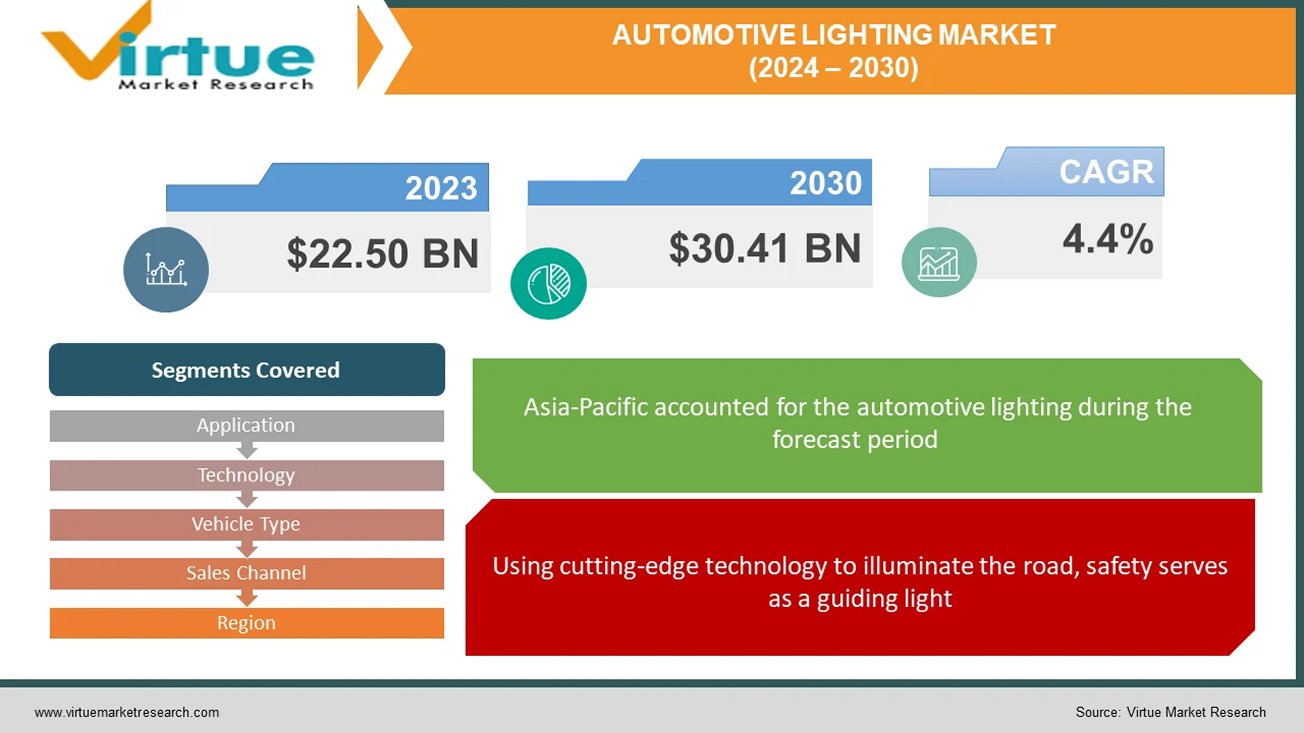
Global automotive lighting refers to all vehicle lighting systems, from headlamps that illuminate the road to taillights that communicate movements. They guarantee motorists and other road users alike safety, visibility, and style. While taillights frequently use LEDs for improved visibility, headlights are available in a variety of technologies, including LED and laser. Interior illumination, DRLs, and signal lights all have a role to play. This market, which was estimated to be worth $33.64 billion in 2022, is anticipated to rise to $67.39 billion by 2030 because of laws, luxury tastes, safety concerns, and technological developments like OLED taillights and adaptive headlights. Anticipate a future dominated by intelligent, connected, personalized, and sustainable lighting systems that enhance the safety, efficiency, and aesthetic appeal of automobiles.
Key Market Insights:
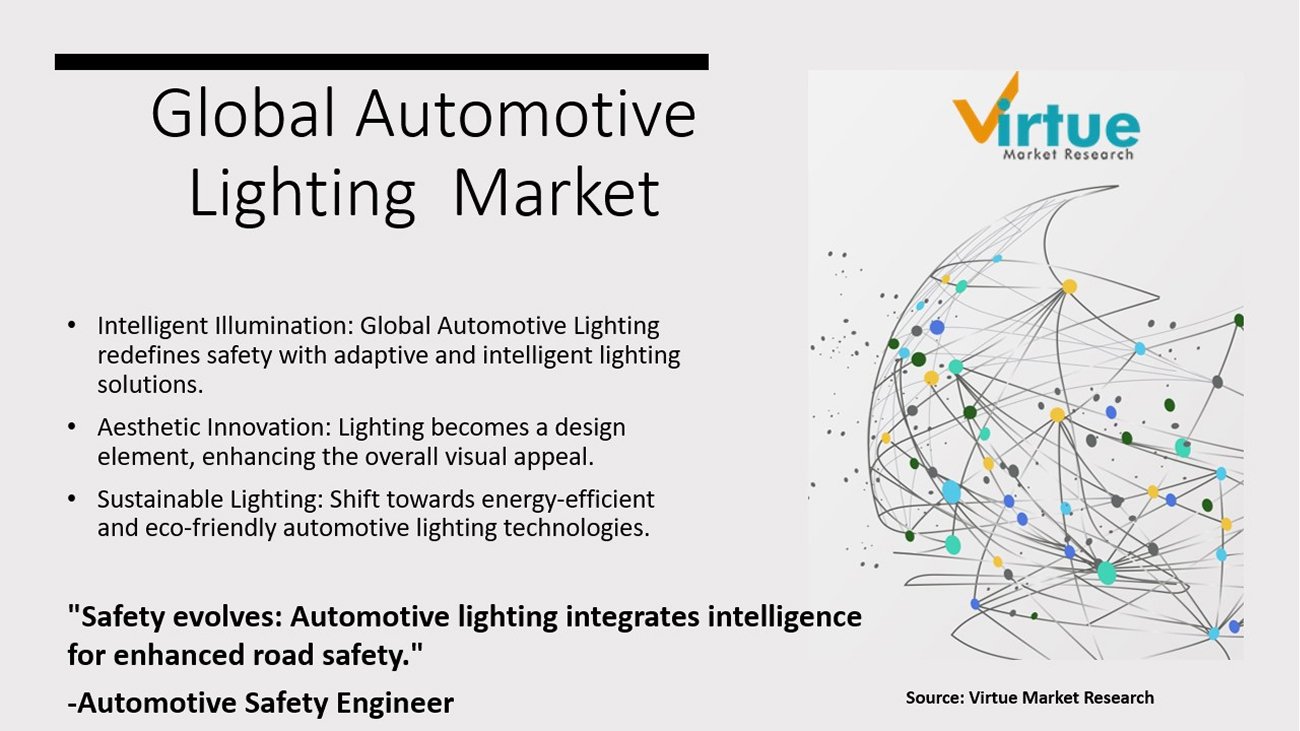
Car lighting works its magic to provide safety, visibility, and style. Headlights cut through the night, taillights express intent, and interiors shine with comfort. The billion-dollar global business is expected to rise due to consumer demand for high-end experiences, safer roads, and cutting-edge technology. Imagine dynamic messages being painted by taillights, headlights that adjust to the road, and interiors that customize their atmosphere. Driven by technological advancements like linked systems and laser beams, this future is calling. Anticipate even more visually attractive, environmentally friendly, and intelligent lighting to illuminate the way ahead, making cars safer, more efficient, and unquestionably cooler.
Global Automotive Lighting Market Drivers:
Using cutting-edge technology to illuminate the road, safety serves as a guiding light.
In the market for automobile lighting, safety is the driving force behind demand from the public and laws. While automated high beams smoothly react to traffic, adaptive headlights modify their beams so as not to blind other people. With visually striking displays, dynamic taillights convey intentions for braking and turning. Beyond these developments, integrated pedestrian identification and lane departure alerts will soon make roads safer and brighter for everyone.
Beyond Performance-Based Luxuries Redefined by Light.
Luxurious automobile lighting creates a distinct visual identity that goes beyond simple illumination. Personalized interior lighting customizes the driving experience by setting the mood with a range of colours and intensities, while intricate designs and distinctive DRLs modify exteriors. As you approach your automobile at night, welcoming lights lead the way, resulting in an interior that is perfectly lit. Not only is this symphony of light aesthetically pleasing, but it also stands as a tribute to luxury. Upcoming developments like gesture-controlled lighting and holographic displays promise to further enhance the experience.
Fuel Efficiency Takes the Lead: Illuminating Sustainability
The worldwide automotive lighting market is undergoing a significant transition towards energy-efficient solutions, as environmental concerns gain prominence. LED technology is leading the way, providing a ray of hope for the environment and drivers alike. LED lights beam brighter and use a lot less energy than conventional halogen lamps. There are some tangible advantages to this. For drivers, this translates to increased fuel economy, which lowers petrol prices and lessens reliance on fossil fuels. Greater air quality and a reduction in the transport sector's contribution to climate change are the results of reduced overall emissions.
To Learn more about this report,
Global Automotive Lighting Market Restraints and Challenges:
Although the global automotive lighting business is booming, there are still unknowns. Difficulties impede growth even as innovation propels it with eye catching features like laser beams and adaptable headlights. These technologies are luxury items due to their high cost and difficult integration, which puts producers' abilities to the test. The worldwide patchwork created by unclear legislation limits the potential of innovation. Durability issues persist, particularly when complex systems are subjected to challenging conditions. Ultimately, a lot of drivers still don't fully understand how these improvements can help them. Together, we can overcome these obstacles. The keys to reducing costs are improved production, more seamless integration, and unified regulations. Their full potential can be realized by educating customers about the safety, efficiency, and aesthetic value of these lighting wonders. By working together, we can pave the way for an even brighter and safer future for vehicle lighting.
Global Automotive Lighting Market Opportunities:
It is made possible by advanced LED technology, which gives drivers the ability to customize their illumination for the highest level of comfort and flair. Consumers that care about the environment want greener products, and vehicle lighting complies. While solar- and self-powered lighting technologies offer a future powered by clean energy, energy-efficient LEDs lower pollution. The advent of connected lighting systems heralds a new age. Envision automobiles interacting with infrastructure and one another to minimize accidents and enhance traffic efficiency. Integrated headlights with pedestrian recognition provide unmatched safety, while dramatic taillights with eye-catching displays alert onlookers to your intentions. The possibilities are endless in the future. Gesture-controlled interior illumination, holographic displays projected onto the road, and even light fixtures with self-healing capabilities.
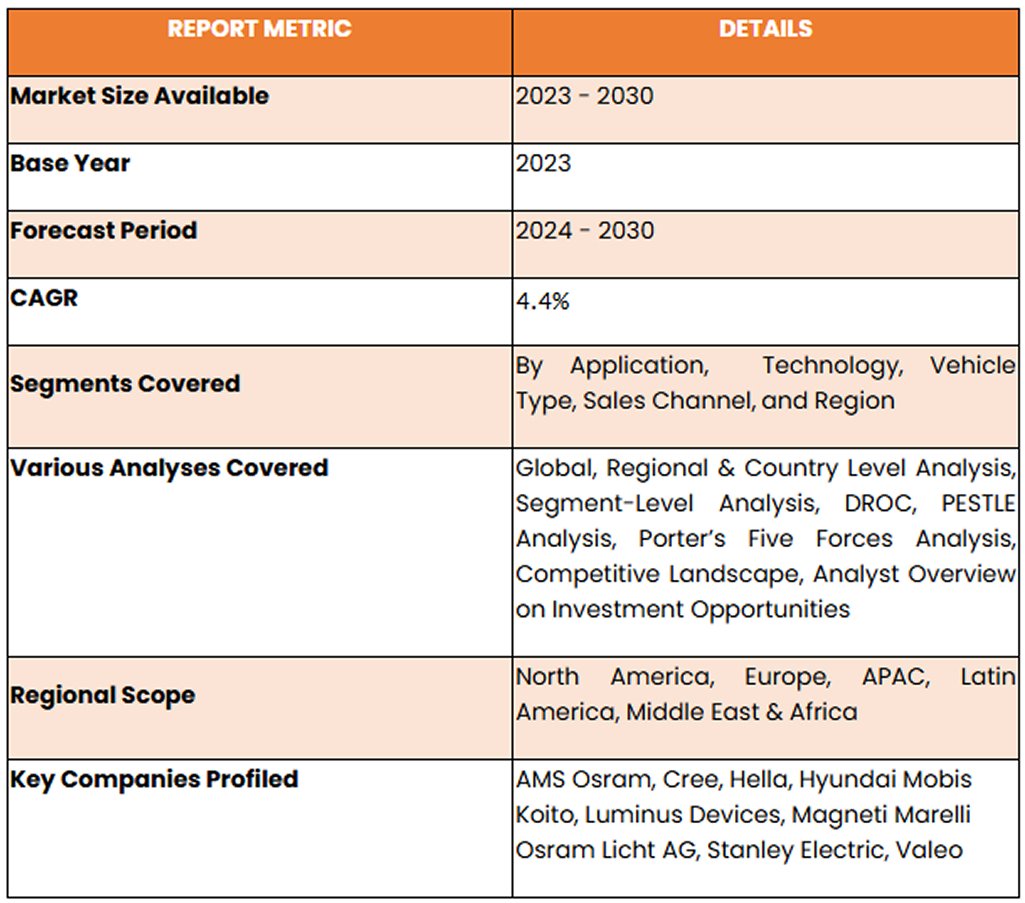
AUTOMOTIVE LIGHTING MARKET REPORT COVERAGE:
To Learn more about this report,
Global Automotive Lighting Market Segmentation: By Application
Exterior Lighting
Interior Lighting
Due to laws requiring safety features like headlights, taillights, and brake lights, exterior lighting presently holds the most market share in the vehicle lighting industry. The dominance of this market is partly attributed to advancements in safety-focused technologies such as adaptive headlights and daytime running lights. The market value of external lighting is increased by the quick adoption of technology like LED bulbs and laser lights, which improve performance and aesthetics. Conversely, the interior lighting market is expected to increase at the fastest rate in the upcoming years. Innovations like ambient lighting and technology breakthroughs like LED and OLED displays, driven by consumer demand for comfort and personalisation, open new possibilities. The spread of sophisticated interior lighting systems is further driven by the growing emphasis on safety and the expansion of the luxury car market.
Global Automotive Lighting Market Segmentation: By Technology
Halogen
LED (Light-Emitting Diode)
Xenon
Emerging Technologies
The worldwide vehicle lighting market is currently dominated by halogen because of its more affordable price, advanced technology, and useful illumination. With its dependable supply chain and affordable option for manufacturers and cost-conscious customers, halogen holds the biggest market share. The fastest-growing market right now is LEDs, which are predicted to shortly overtake halogen. The rapid expansion of LEDs is driven by their higher efficiency, longer lifespan, flexibility in design, and technological breakthroughs including enhanced brightness. Because LEDs use less energy and produce fewer emissions and better fuel economy, they are becoming more and more popular in the changing automotive lighting market.
Global Automotive Lighting Market Segmentation: By Vehicle Type
Passenger Cars
Commercial Vehicles
Passenger automobiles rule the worldwide automotive lighting market. The sheer number of passenger cars produced which surpasses that of business vehicles and fuels the need for lighting systems is the primary cause of this popularity. The growing demand for personal automobiles in developing nations is a result of rising disposable income, which in turn drives the rise of the passenger car market. The importance that consumers place on safety and aesthetics elements helps to drive market expansion. But in the upcoming years, the market for electric and hybrid cars is expected to develop at the quickest rate. The exponential rise of the worldwide electric car market, which is still expanding and shows no signs of slowing down, is what is driving this surge. Specialised lighting solutions are required since electric and hybrid vehicles have different lighting requirements because of their specific functionality and design aesthetics.
Global Automotive Lighting Market Segmentation: By Sales Channel
OEM (Original Equipment Manufacturers)
Aftermarket
Most lighting systems sold nowadays are sold by OEMs (Original Equipment Manufacturers), primarily because manufacturers pre-install lighting systems in new cars. But in the next years, the aftermarket is expected to develop at the quickest rate. This spike in demand for replacement parts, especially lighting systems, can be linked to several variables, one of them being the average age of cars. The industry is expanding because of consumers' growing desire to personalise their cars with aftermarket lighting upgrades such LED upgrades and decorative lighting. The availability and affordability of technologies like adaptive headlights and laser lights in the aftermarket, together with other advancements in lighting technology, are driving demand even more. Moreover, the growing market for electric cars (EVs).
To Learn more about this report,
Global Automotive Lighting Market Segmentation: By Region
North America
Asia-Pacific
Europe
South America
Middle East and Africa
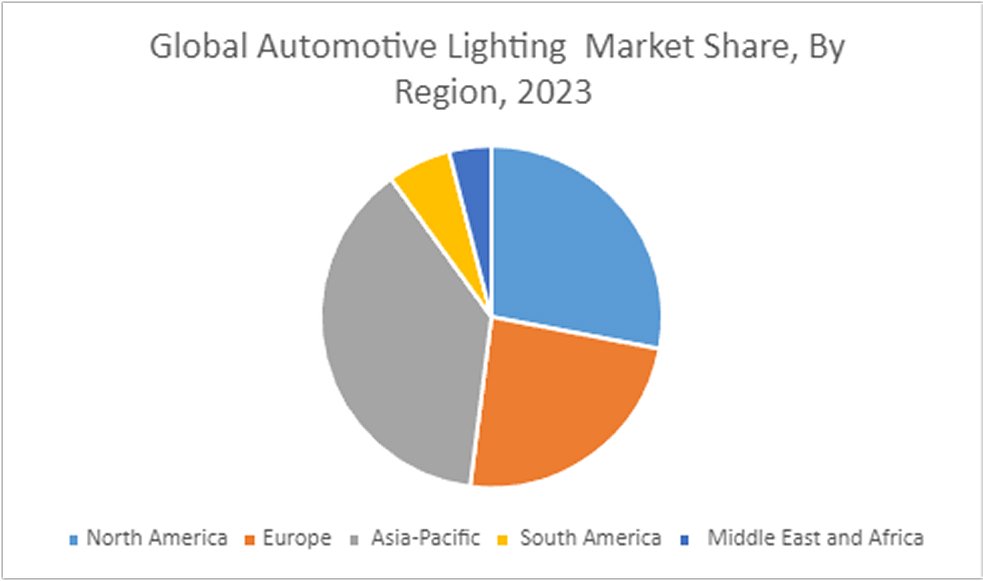
Throughout the forecast period, Asia Pacific is anticipated to be the automotive lighting market with the highest profitability. Over the past few years, Asia Pacific countries like China and India have seen notable increases in automotive manufacturing and sales, primarily in the medium-to premium luxury car segment. Asia Pacific is predicted to see an increase in the manufacturing of passenger cars, with India experiencing the strongest growth rate. Depending on the state of the national economy, the area offers a suitable selection of both high-end and cheap cars. For instance, there is a substantial demand for halogen, Xenon/HID, and LED since China and India produce more economy and mid-range automobiles. On the other hand, luxury car adoption rates are greater in South Korea and Japan, where LED lighting is the norm.
COVID-19 Impact Analysis on the Global Automotive Lighting Market:
A brief shadow was thrown by COVID-19 over the worldwide automotive lighting market. Production was stopped by lockdowns and supply chain disruptions, while luxury lighting upgrades were shelved by consumers on a tight budget. Resources became scarce, and R&D stagnated. Still, the market is recovering thanks to resurgent demand and rearranged priorities. While energy-efficient LEDs are being pushed towards adoption by sustainability, safety concerns are driving interest in features like pedestrian detection and adaptive headlights. The digital push of the epidemic creates opportunities for intelligent, networked lighting systems that may interact with infrastructure and other cars. Ultimately, the industry is positioned to shine brighter, focused on safety, sustainability, and a connected future, even though the pandemic dimmed its brilliance.
Recent Trends and Developments in the Global Automotive Lighting Market:
A development collaboration between OSRAM Continental and REHAU aims to incorporate lighting into external components, providing automobile manufacturers with innovative lighting options that improve functionality and design flexibility. For rear combination lamps, Hella unveiled a revolutionary lighting innovation called Hella FlatLight technology. A Memorandum of Understanding (MoU) was signed by Samvardhana Motherson Automotive Systems Group BV (SMRPBV), a division of Motherson Group, and Marelli Automotive Lighting to investigate a technology collaboration focused on intelligently lighted external body components. Valeo debuted their revolutionary 360° lighting system at the Shanghai Auto Show. This technology surrounds the car with a band of light, projecting instantaneous, clear signs that other drivers can see from a distance. Pedestrians, cyclists, and scooter riders are especially susceptible to these signals
Key Players:
AMS Osram
Cree
Hella
Hyundai Mobis
Koito
Luminus Devices
Magneti Marelli
Osram Licht AG
Stanley Electric
Valeo
Chapter 1. Energy-Intensive Industry Power Procurement Market– Scope & Methodology
1.1. Market Segmentation
1.2. Scope, Assumptions & Limitations
1.3. Research Methodology
1.4. Primary Contract Duration `
1.5. Secondary Source Chapter 2. Energy-Intensive Industry Power Procurement Market– Executive Summary
2.1. Market Size & Forecast – (2026 – 2030) ($M/$Bn)
2.2. Key Trends & Insights
2.2.1. Demand Side
2.2.2. Supply Side
2.3. Attractive Investment Propositions
2.4. COVID-19 Impact Analysis Chapter 3. Energy-Intensive Industry Power Procurement Market– Competition Scenario
3.1. Market Share Analysis & Company Benchmarking
3.2. Competitive Strategy & Development Scenario
3.3. Competitive Pricing Analysis
3.4. Supplier-Distributor Analysis Chapter 4. Energy-Intensive Industry Power Procurement Market- Entry Scenario
4.1. Regulatory Scenario
4.2. Case Studies – Key Start-ups
4.3. Customer Analysis
4.4. PESTLE Analysis
4.5. Porters Five Force Model
4.5.1. Bargaining Power of Suppliers
4.5.2. Bargaining Powers of Customers
4.5.3. Threat of New Entrants
4.5.4. Rivalry among Existing Players
4.5.5. Threat of Substitutes Chapter 5. Energy-Intensive Industry Power Procurement Market- Landscape
5.1. Value Chain Analysis – Key Stakeholders Impact Analysis
5.2. Market Drivers
5.3. Market Restraints/Challenges
5.4. Market Opportunities
Chapter 6. Energy-Intensive Industry Power Procurement Market– By Procurement Model
6.1 Introduction/Key Findings
6.2 Power Purchase Agreements (PPAs)
6.3 Utility Tariff & Regulated Supply
6.4 Direct Wholesale Market Procurement
6.5 Self-Generation & Behind-the-Meter
6.6 Others
6.7 Y-O-Y Growth trend Analysis By Procurement Model
6.8 Absolute $ Opportunity Analysis By Procurement Model , 2026-2030
Chapter 7. Energy-Intensive Industry Power Procurement Market– By Energy Source
7.1 Introduction/Key Findings
7.2 Renewable Energy (Solar, Wind, Hydro)
7.3 Natural Gas & Combined Heat and Power (CHP)
7.4 Nuclear
7.5 Coal & Conventional Thermal
7.6 Others
7.7 Y-O-Y Growth trend Analysis By Energy Source
7.8 Absolute $ Opportunity Analysis By Energy Source 2026-2030
Chapter 8. Energy-Intensive Industry Power Procurement Market– By End-Use Industry
8.1 Introduction/Key Findings
8.2 Steel & Metals
8.3 Chemicals & Petrochemicals
8.4 Cement & Building Materials
8.5 Data Centers & Digital Infrastructure
8.6 Aluminum & Non-Ferrous Metals
8.7 Pulp & Paper
8.8 Others
8.9 Y-O-Y Growth trend Analysis End-Use Industry
8.1 Absolute $ Opportunity Analysis End-Use Industry, 2026-2030 Chapter 9. Energy-Intensive Industry Power Procurement Market– By Contract Duration
9.1 Introduction/Key Findings
9.2 Short-Term (<1 Year)
9.3 Medium-Term (1–5 Years)
9.4 Long-Term (>5 Years)
9.5 Others
9.6 Y-O-Y Growth trend Analysis Contract Duration
9.7 Absolute $ Opportunity Analysis, Contract Duration 2026-2030
Chapter 10. Energy-Intensive Industry Power Procurement Market, By Geography – Market Size, Forecast, Trends & Insights
10.1. North America
10.1.1. By Country
10.1.1.1. U.S.A.
10.1.1.2. Canada
10.1.1.3. Mexico
10.1.2. By Procurement Model
10.1.3. By Contract Duration
10.1.4. By End-Use Industry
10.1.5. Energy Source
10.1.6. Countries & Segments - Market Attractiveness Analysis
10.2. Europe
10.2.1. By Country
10.2.1.1. U.K.
10.2.1.2. Germany
10.2.1.3. France
10.2.1.4. Italy
10.2.1.5. Spain
10.2.1.6. Rest of Europe
10.2.2. By Procurement Model
10.2.3. By Contract Duration
10.2.4. By End-Use Industry
10.2.5. Energy Source
10.2.6. Countries & Segments - Market Attractiveness Analysis
10.3. Asia Pacific
10.3.1. By Country
10.3.1.2. China
10.3.1.2. Japan
10.3.1.3. South Korea
10.3.1.4. India
10.3.1.5. Australia & New Zealand
10.3.1.6. Rest of Asia-Pacific
10.3.2. By Procurement Model
10.3.3. By Energy Source
10.3.4. By End-Use Industry
10.3.5. Contract Duration
10.3.6. Countries & Segments - Market Attractiveness Analysis
10.4. South America
10.4.1. By Country
10.4.1.1. Brazil
10.4.1.2. Argentina
10.4.1.3. Colombia
10.4.1.4. Chile
10.4.1.5. Rest of South America
10.4.2. By Energy Source
10.4.3. By Procurement Model
10.4.4. By Contract Duration
10.4.5. End-Use Industry
10.4.6. Countries & Segments - Market Attractiveness Analysis
10.5. Middle East & Africa
10.5.1. By Country
10.5.1.4. United Arab Emirates (UAE)
10.5.1.2. Saudi Arabia
10.5.1.3. Qatar
10.5.1.4. Israel
10.5.1.5. South Africa
10.5.1.6. Nigeria
10.5.1.7. Kenya
10.5.1.10. Egypt
10.5.1.10. Rest of MEA
10.5.2. By Procurement Model
10.5.3. By Energy Source
10.5.4. By End-Use Industry
10.5.5. Contract Duration
10.5.6. Countries & Segments - Market Attractiveness Analysis Chapter 11. Energy-Intensive Industry Power Procurement Market – Company Profiles – (Overview, Portfolio, Financials, Strategies & Developments)
11.1 NextEra Energy Inc.
11.2 Enel Green Power S.p.A.
11.3 Ørsted A/S
11.4 Iberdrola S.A.
11.5 EDF Group (Electricité de France)
11.6 Vattenfall AB
11.7 Engie S.A.
11.8 E.ON SE
11.9 Shell Energy
11.10 TotalEnergies SE
Fill out the form below and our team will get back to you shortly
FAQ's
The primary growth drivers are the explosive expansion of hyperscale data center power demand driven by AI infrastructure buildout.
The most significant operational challenge is the structural mismatch between intermittent renewable generation profiles and the continuous, inflexible power demand of energy-intensive industrial processes.
The competitive landscape is anchored by large-scale renewable energy developers and integrated utilities that serve as counterparties to industrial power purchase agreements. NextEra Energy, Enel Green Power, Iberdrola, and Ørsted are the leading renewable PPA counterparties by contracted capacity globally. EDF Group and Constellation Energy serve the nuclear and low-carbon firm power segment critical for round-the-clock industrial supply.
Asia-Pacific holds the dominant market share by total procurement value, driven by China’s position as the world’s largest energy-intensive manufacturing economy with enormous steel, aluminum, chemical, and cement production capacity consuming electricity at scales that no other regional market approaches
North America is demonstrating the fastest regional market value growth, driven by the historically unprecedented expansion of hyperscale data center renewable power procurement executing across US and Canadian electricity markets, the industrial capacity investment stimulated by the CHIPS Act and Inflation Reduction Act creating new energy-intensive manufacturing power demand.
More related reports
Get expert-driven market research reports from a leading research partner to help you navigate the future of the global industry.
Report Code: VMR-19366 | Published Date: May 2026 | Format: Excel and PDF
In 2025, the HVDC Transmission Systems Market was valued at approximately USD 13.84 Billion. It is projected to grow at a CAGR of around 7.7% during the forecast period of 2026–2030, reaching an estimated USD 20.05 Billi...
Report Code: VMR-19364 | Published Date: May 2026 | Format: Excel and PDF
In 2025, the Reactive Power Compensation Market was valued at approximately USD 8.14 Billion. It is projected to grow at a CAGR of around 8.3% during the forecast period of 2026–2030, reaching an estimated USD 12.13 Bill...
Report Code: VMR-19363 | Published Date: May 2026 | Format: Excel and PDF
In 2025, the Microgrid Controllers & Integration Services Market was valued at approximately USD 5.84 Billion. It is projected to grow at a CAGR of around 9.8% during the forecast period of 2026–2030, reaching an estimat...
Report Code: VMR-19318 | Published Date: April 2026 | Format: Excel and PDF
In 2025, the Grid Protection & Control Systems Market was valued at approximately USD 109.7 Billion. It is projected to grow at a CAGR of around 8% during the forecast period of 2026–2030, reaching an estimated USD 161.1...
Report Code: VMR-19314 | Published Date: April 2026 | Format: Excel and PDF
In 2025, the AI Model Monitoring and Guardrails Market was valued at approximately USD 2,140 million. It is projected to grow at a CAGR of around 8.40% during the forecast period of 2026–2030, reaching an estimated USD 3...
“We received a complex piece of work for our niche market from Virtue Market research in short period of time. I appreciate the quality and content of the final files we received. Thanks for the support”
Medical Devices Company based in Europe
“We received a complex piece of work for our niche market from Virtue Market research in short period of time. I appreciate the quality and content of the final files we received. Thanks for the support”
Medical Devices Company based in Europe
“We received a complex piece of work for our niche market from Virtue Market research in short period of time. I appreciate the quality and content of the final files we received. Thanks for the support”
Medical Devices Company based in Europe
“We received a complex piece of work for our niche market from Virtue Market research in short period of time. I appreciate the quality and content of the final files we received. Thanks for the support”
Medical Devices Company based in Europe
“We received a complex piece of work for our niche market from Virtue Market research in short period of time. I appreciate the quality and content of the final files we received. Thanks for the support”
Medical Devices Company based in Europe
“We received a complex piece of work for our niche market from Virtue Market research in short period of time. I appreciate the quality and content of the final files we received. Thanks for the support”