
Asia Pacific Smoothies Market
The Asia Pacific smoothies’ market is expected to grow from approximately USD 4.5 billion in 2025 to around USD 8.5 billion in 2030, at a compound annual growth rate of around 12.8% during 2025-2030.
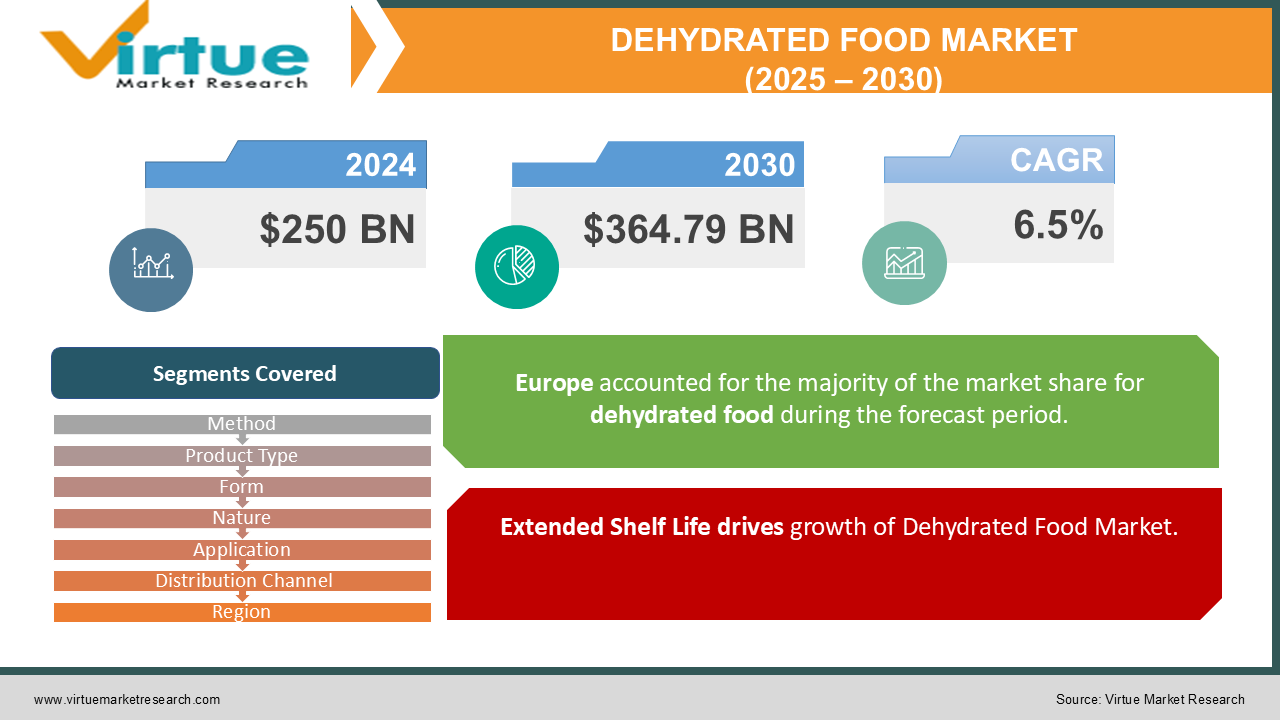
Explore reportThe Dehydrated Food Market was valued at USD 250 billion in 2024. Over the forecast period of 2025-2030, it is projected to reach USD 364.79 billion by 2030, growing at a CAGR of 6.5%.
Dehydrated foods, known for their low moisture content, provide a distinctive blend of convenience, prolonged shelf life, and preserved nutritional value, making them a favored option for individuals, families, outdoor enthusiasts, and those engaged in emergency preparedness. These foods are produced by removing a substantial amount of moisture through techniques such as air drying, freeze drying, or sun drying. This dehydration process not only extends the shelf life of the products but also helps retain key nutrients and flavors. The market offers a wide variety of dehydrated foods, ranging from dried fruits and vegetables to jerky, complete meal options, and powdered dairy products, meeting the diverse needs and dietary preferences of consumers. Drying is a method in which the moisture content of food is reduced to a specified level, thereby enhancing its shelf life while maintaining its nutritional value.
Key Market Insights:
Shifting consumer preferences, particularly in terms of food choices and the increasing adoption of on-the-go eating habits, are anticipated to drive the demand for dried foods.
Additionally, the emphasis on offering nutrient-rich dried products, including ready-to-cook or on-the-go meals and snacks, remains a key growth strategy for dehydrated vegetable suppliers.
The rising demand for processed diets is pushing food manufacturers to innovate, leading to the development of new products that offer both convenience and extended shelf life.
Dehydrated vegetables are swiftly gaining popularity as preferred snacks among those seeking ready-to-eat vegetable options. This growing demand is significantly contributing to the overall sales growth of dehydrated vegetable products.
Dehydrated Food Market Drivers:
Extended Shelf Life drives growth of Dehydrated Food Market.
The extended shelf life of dehydrated foods, in comparison to fresh alternatives, is a primary factor contributing to the growth of the dehydrated food market. Their resistance to spoilage makes them ideal for long-term storage, reducing the frequency of food purchases and minimizing waste. This characteristic is particularly advantageous in regions with limited access to fresh produce or in emergency preparedness situations, where long-lasting food supplies are essential.
Moreover, the extended shelf life benefits retailers and distributors by lowering the risk of unsold inventory due to spoilage. In the long run, this aspect of dehydrated foods is expected to remain a key market driver, particularly as global supply chain challenges continue and consumer emphasis on sustainability and waste reduction grows.

Limited Availability of Raw Materials hinders Dehydrated Food Market Growth.
The growth of the dehydrated food market is hindered by the limited availability of high-quality raw materials. Securing fresh, top-grade produce is essential for the production of dehydrated food items. Factors such as fluctuations in agricultural yields, supply chain disruptions, and competition from other food sectors for these raw materials can result in shortages and higher costs. This constraint can impact the consistency and volume of production, making it difficult for the market to meet the increasing consumer demand while maintaining product quality.
Dehydrated Food Market Opportunities:
Convenience of Packaged Dehydrated Foods creates opportunities in the market.
The convenience of packaged dehydrated foods, especially snacks, has been a key factor in their rise as market essentials. These snacks are lightweight, portable, and non-perishable, making them perfect for travel, hiking, and on-the-go consumption. As a result, they have gained popularity among consumers seeking quick, healthy, and easily transportable food options. Packaged dehydrated snacks align well with the fast-paced lifestyles of modern consumers, who prioritize convenience and time-saving solutions.
DEHYDRATED FOOD MARKET REPORT COVERAGE:
|
REPORT METRIC |
DETAILS |
|
Market Size Available |
2024 - 2030 |
|
Base Year |
2024 |
|
Forecast Period |
2025 - 2030 |
|
CAGR |
6.5% |
|
Segments Covered |
By Method, Product Type, Form, Nature, Application, Distribution Channel, and Region |
|
Various Analyses Covered |
Global, Regional & Country Level Analysis, Segment-Level Analysis, DROC, PESTLE Analysis, Porter’s Five Forces Analysis, Competitive Landscape, Analyst Overview on Investment Opportunities |
|
Regional Scope |
North America, Europe, APAC, Latin America, Middle East & Africa |
|
Key Companies Profiled |
Van Drunen Farms, Mercer Foods, LLC, European Freeze , Dry Harmony House Foods Inc., Ajinomoto Co. Inc., Tong Garden Co. Ltd., Mother Earth Products, Augason Farms, Nutristore Canada, Nim's Fruit Crisps Limited. |
Spray dried
Air dried/Sun dried
Vacuum dried/ Microwave dried
Freeze dried
Others (drum dried, etc)
One method that has gained significant traction in the global dehydrated food products market is spray drying. This technology has transformed the food industry by enabling the large-scale production of high-quality, shelf-stable dehydrated products. Spray drying involves converting a liquid or slurry into fine particles using heat. In the food industry, it is commonly used to create powdered or granulated versions of various products, such as dairy, fruits, vegetables, and even beverages.
Operating at relatively low temperatures, spray drying helps to preserve the nutritional content of food, minimizing the degradation of vitamins, minerals, and other sensitive nutrients compared to some alternative drying methods. Additionally, the rapid evaporation during the process results in small particles with a high surface area, improving solubility and making spray-dried products ideal for instant mixes like soups, beverages, and sauces. The moisture removal through spray drying also prevents the growth of spoilage-causing microorganisms, thereby extending the shelf life of products, which is particularly beneficial for long-term storage. As the demand for dehydrated food products continues to grow, spray drying is expected to play a critical role in shaping the market's development.
Milk powder
Other Dairy Products
Fruits
Vegetables
Herbs
Fish and Seafood
Meat
Others (pet foods)
The milk powder segment is anticipated to lead the market throughout the forecast period. Due to its widespread use and versatile applications, milk powder has become a staple in kitchens, pantries, and industries globally. Its adaptability in various culinary applications is a major factor driving its market dominance. Milk powder is a key ingredient in both sweet and savory dishes, providing a rich, creamy flavor. It enhances the taste of sauces, soups, baked goods, and confectionery, contributing a comforting and indulgent texture.
Through the dehydration process, moisture is removed, making milk powder less prone to spoilage and allowing it to be stored for much longer periods. This extended shelf life adds to its appeal and reinforces its position as a dominant product in the dehydrated food market.
Powder & Granules
Minced & Chopped
Slice & Cubes
Flakes
Others (whole)
The powder and granules segment is dominating & expected to continue its growth due to their versatility and convenience. Dehydrated powders and granules are widely used as flavor enhancers, nutritional supplements, and in the production of various food products, including sauces, soups, seasonings, and beverages. The increasing demand for convenient cooking solutions and personalized flavor options has driven the expansion of this segment.
The dehydration process removes moisture, which is crucial for microbial growth, thereby significantly extending the shelf life of the product. When properly packaged and stored, dehydrated food can last for months or even years without spoiling. Additionally, the removal of water content reduces the weight and volume of the food, making it lighter and more compact, further enhancing its appeal to consumers seeking efficient and long-lasting food options.
Conventional
Organic
Conventional dehydrated food products are experiencing growth due to several factors, including shifts in consumer preferences, technological innovations, economic influences, and sustainability concerns. The fast-paced nature of modern lifestyles and the increasing demand for convenient, ready-to-eat or easy-to-prepare food options have led to a surge in interest in dehydrated foods. These products are quick to rehydrate and use, making them a practical choice for consumers on the go.
This makes them especially appealing to consumers looking to stock up on non-perishable items for emergencies or outdoor activities. Additionally, dehydration helps to minimize food waste by extending the shelf life of perishable ingredients, aligning with the growing consumer awareness of sustainability and the desire to make environmentally responsible choices.
Consumers are also becoming more adventurous in their food choices, exploring diverse flavors and ingredients from different cultures. Dehydrated foods provide access to unique ingredients that may not be readily available locally. Furthermore, concerns about natural disasters, supply chain disruptions, and other emergencies have prompted many consumers to incorporate dehydrated foods into their food security and emergency preparedness plans.
Desserts and Ice Cream
Bakery and Confectionery
Yogurt and Smoothies
Salads and Pasta
Soups and Snacks
Pet Food and Treats
Dips, Dressings & Seasoning mix
Others (Breakfast Cereals)
Dehydrated food products are increasingly utilized in desserts and ice cream for various benefits, such as flavor enhancement, texture modification, convenience, and extended shelf life. By removing the water content from fruits, nuts, and other ingredients, dehydration concentrates their natural flavors, intensifying the taste and adding a rich burst of flavor to desserts and ice cream, thereby enhancing the overall sensory experience.
The crunchy or chewy elements add an interesting mouthfeel, elevating the enjoyment of the dessert. Furthermore, dehydrated ingredients offer the opportunity to introduce flavors and textures that may not be available or in season throughout the year, allowing chefs and food manufacturers to create consistent and diverse dessert offerings regardless of the season. These ingredients are also easy to incorporate into dessert recipes, providing convenience for both culinary professionals and home cooks.
Supermarkets/Hypermarkets
Convenience Stores
Online Stores
Specialist Stores
Others
Food manufacturers play a crucial role in the production and supply of dehydrated food products across various distribution channels. They typically produce large quantities of dehydrated ingredients, additives, and ready-to-eat meals, which are then distributed to different sectors within the food industry. Dehydrated ingredients, such as dried fruits, vegetables, spices, and herbs, are sold to other food manufacturers for use in a wide range of products, including packaged snacks, cereals, soups, sauces, and more.
Additionally, dehydrated additives like flavor enhancers, seasonings, and food colorings are utilized by food manufacturers to create specific flavors and visual appeal in their offerings. Manufacturers also produce dehydrated products that are later rebranded for various retail and foodservice sectors, providing opportunities for customization and flexible branding options. This ability to tailor products allows manufacturers to meet the diverse needs of the market while maintaining control over production processes.

North America
Europe
Asia Pacific
South America
Middle East & Africa
Consumers in Europe are increasingly prioritizing healthier food choices, and dehydrated products offer a convenient solution by preserving the nutritional value of ingredients while extending their shelf life. Dehydrated fruits, vegetables, and grains typically retain a substantial portion of their vitamins and minerals, making them a valuable option for health-conscious individuals.
The extended shelf life of dehydrated products, compared to fresh produce, has made them particularly appealing to consumers aiming to reduce food waste and those seeking to stock up on non-perishable items. Additionally, dehydrated ingredients are being used innovatively by both chefs and home cooks to enhance flavors, textures, and visual appeal in various dishes. This creativity has led to the incorporation of dehydrated foods in gourmet and high-end culinary applications.
Germany stands out as a key market for dehydrated fruit products, driven by a health-conscious consumer base. In 2023, Germany led Europe in vegetable imports, ranked second in fruit imports, and became the second-largest consumer of dried tropical fruits, following the UK. Notably, products like dried natural mangoes and sugar-free dried bananas have experienced significant growth, transitioning from specialty stores to major discount retailers such as Aldi and Lidl.
COVID-19 Pandemic: Impact Analysis
The disruption in the supply chain for raw materials hindered the processing of dehydrated food products, while the lack of cross-border transportation prevented the export of these items. As a result, there was an insufficient supply to meet demand, which negatively impacted the company's revenue.
Latest Trends/ Developments:
June 2024: Nestlé invested USD 29.1 million in a new technology designed to produce noodles with reduced fat and salt content, aligning with the growing demand for healthier food options.
March 2024: Amano Foods introduced a new line of specially crafted freeze-dried miso soup, available in various variants that include vegetables, seasonings, and spices, catering to diverse consumer tastes.
January 2024: GEA assisted Nestlé in reducing steam consumption by 75% at its new infant formula plant in Nunspeet, Netherlands. By integrating advanced process and heat pump technology into the milk powder line, Nestlé achieved significant energy savings and a reduction in carbon emissions through innovative heat recovery from the spray dryer and other processes.
Key Players:
These are top 10 players in the Dehydrated Food Market :-
Van Drunen Farms
Mercer Foods, LLC
European Freeze
Dry Harmony House Foods Inc.
Ajinomoto Co. Inc.
Tong Garden Co. Ltd.
Mother Earth Products
Augason Farms
Nutristore Canada
Nim's Fruit Crisps Limited.
Shifting consumer preferences, particularly in terms of food choices and the increasing adoption of on-the-go eating habits, are anticipated to drive the demand for dried foods.
The top players operating in the Dehydrated Food Market are - Van Drunen Farms, Mercer Foods, LLC and European Freeze Dry.
The disruption in the supply chain for raw materials hindered the processing of dehydrated food products, while the lack of cross-border transportation prevented the export of these items.
The convenience of packaged dehydrated foods, especially snacks, has been a key factor in their rise as market essentials. These snacks are lightweight, portable, and non-perishable, making them perfect for travel, hiking, and on-the-go consumption.
Asia-Pacific is the fastest-growing region in the Dehydrated Food Market.
Joining thousands of companies around the world committed to making the Excellent Business Solutions.


Specify your preferred Countries, Segments, or timeframes

Unlock Country Level Outlook, Trends, Cross-country Comparability, or supply Chain Variations.



Analyst Support
Every order comes with Analyst Support.

Customization
We offer customization to cater your needs to fullest.

Verified Analysis
We value integrity, quality and authenticity the most.

